Zyl is out now on iOS
Zyl released on June 18. Two days later, I look back at its App Store feature, early chart position, revenue, and the path to launch.
Zyl is now out on iOS. It launched on June 18, and I wanted to write a quick update two days after release.
Zyl is a small, relaxing puzzle game about pathfinding. You place arrows on a board, collect every star, and guide the paths to their exits. Once you think you have it right, you press Play and watch it run. There are 300 handcrafted levels, no ads, no IAPs, no timers, and no data collection apart from crash logs.
The idea behind Zyl goes back much further than this launch. In 2014, I worked on an earlier version of the concept called Constello. It was also a small mobile puzzle game, but the idea was about fitting missing pieces into constellations. I never shipped it properly, but I did put together a full visual direction for it.
There is also still a playable version of Constello online. It is old, and I can see a lot of things I would do differently now, but it is fun to look back at it because so much of Zyl started there. The space theme, the quiet pacing, the small handcrafted levels, and even the feeling of solving something by watching pieces fall into place all came from that earlier attempt.
Zyl eventually became a different game mechanically. Constello was about completing constellations. Zyl is about placing arrows and routing paths. But in my head they are connected. Zyl feels like the version of that old idea that I finally had the patience and experience to finish.
After releasing Hue Rings, I knew I wanted to keep Zyl's business model simple. That launch taught me a lot, and I wrote about why free-to-play was the wrong fit for a small indie game, and why I eventually moved to a paymium model. I made Zyl as a $1.99 premium game. That is it: no ads, currencies, or IAP packs.
I initially had 200 levels planned for Zyl, then increased that to 300 before launch. I had planned to raise the price to $2.99 as well, but eventually decided against it. Apps like AppRaven track an app's price history, and raising the price right at launch can rub people up the wrong way. Keeping it at $1.99 felt like the better decision.
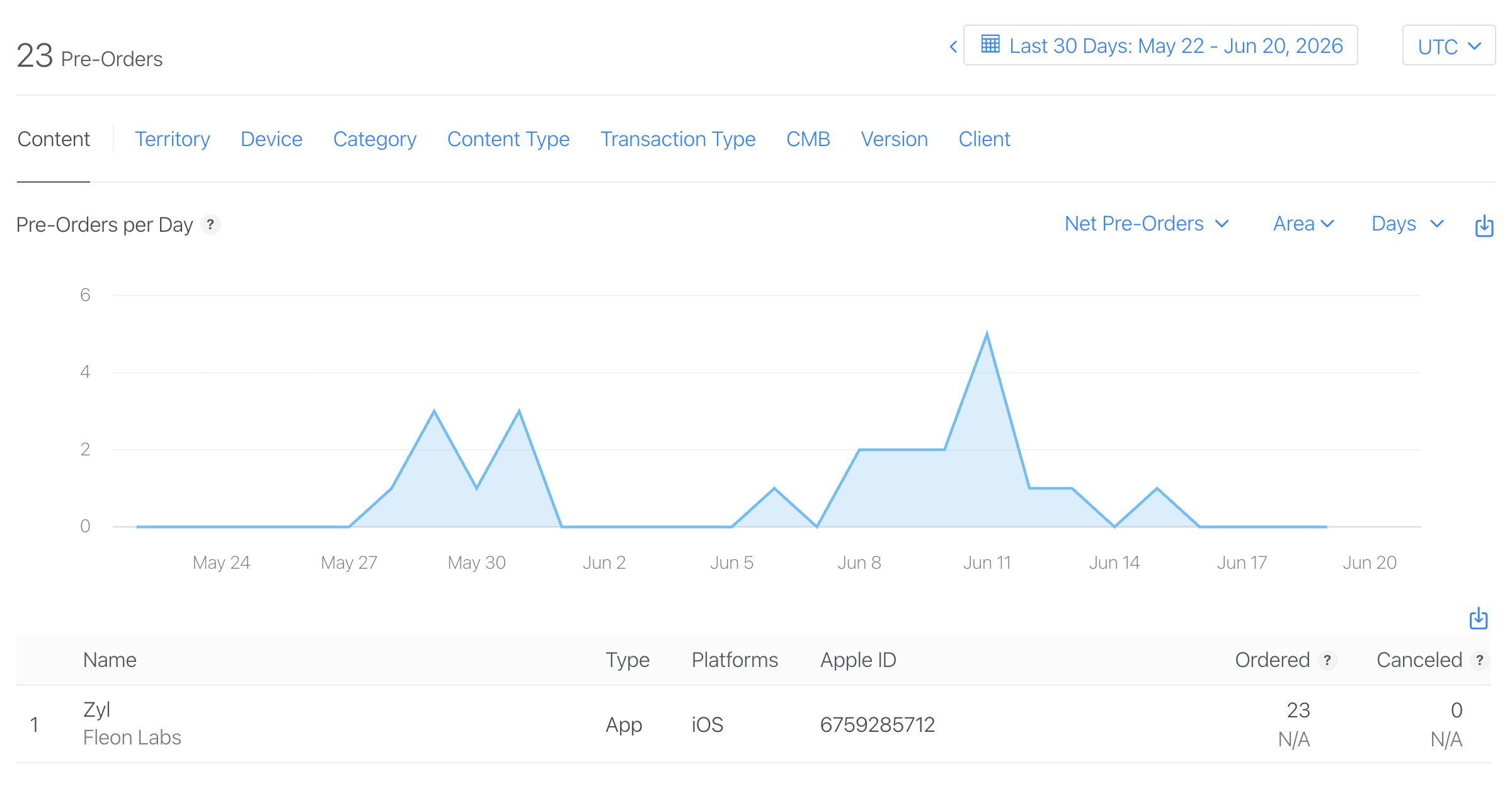
I put Zyl up for pre-order as soon as it was approved for release, opened a TestFlight, and started posting about it on Reddit. I shared some screenshots and talked about what I had learned from Hue Rings. My first organic marketing effort brought in eight pre-orders. Posting on AppRaven added another 8-10, bringing the total to 23 before launch, including friends and family members who also pre-ordered the game. Not much, especially when compared to Sheeping Around, which got 250 pre-orders at launch, but that was over seven years ago, and times are a bit different now.
I made the entire game using SpriteKit, mostly with SKShapeNode objects and shaders. There are no texture images in the game. I wanted to see how far I could take shapes, gradients, glows, and shaders in a native iOS game, while keeping everything running smoothly at 60 fps.
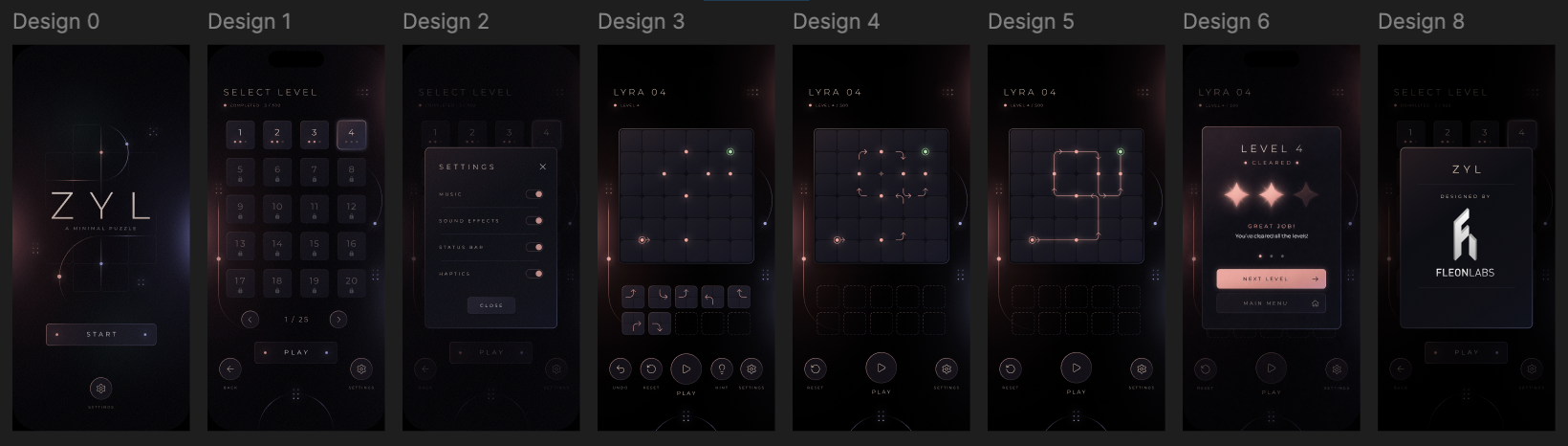
Earlier in the process, I worked through a few versions of the screens in Figma. I designed the title screen, level select, gameplay UI, and clear screen there first. It helped me settle on the dark nebula background and the small glow effects before I started putting it together in SpriteKit.
Getting the onboarding right took more work than I expected. The core idea is simple, but it is easy to make a puzzle game feel complicated if every mechanic is explained at once. I kept changing the first few levels so arrows, stars, exits, splits, merges, and U-turns could be learned one by one without too much text getting in the way. I also kept the rating prompt away from the level-clear screen; it only appears when a player has completed enough levels and comes back to the title screen, so it does not interrupt a solve.
I also spent a lot of time on the small things around the game. Zyl is localized into 13 languages, so every short label and instruction needed to fit the UI properly. I did not want the translated text to make the game feel messy or break the flow of the screens.
Creating the App Store screenshots and preview video was another project by itself. I used RocketSim to record the videos because normal Simulator recordings do not include audio. That made it possible to capture the gameplay with the music and sound effects that are part of the experience.
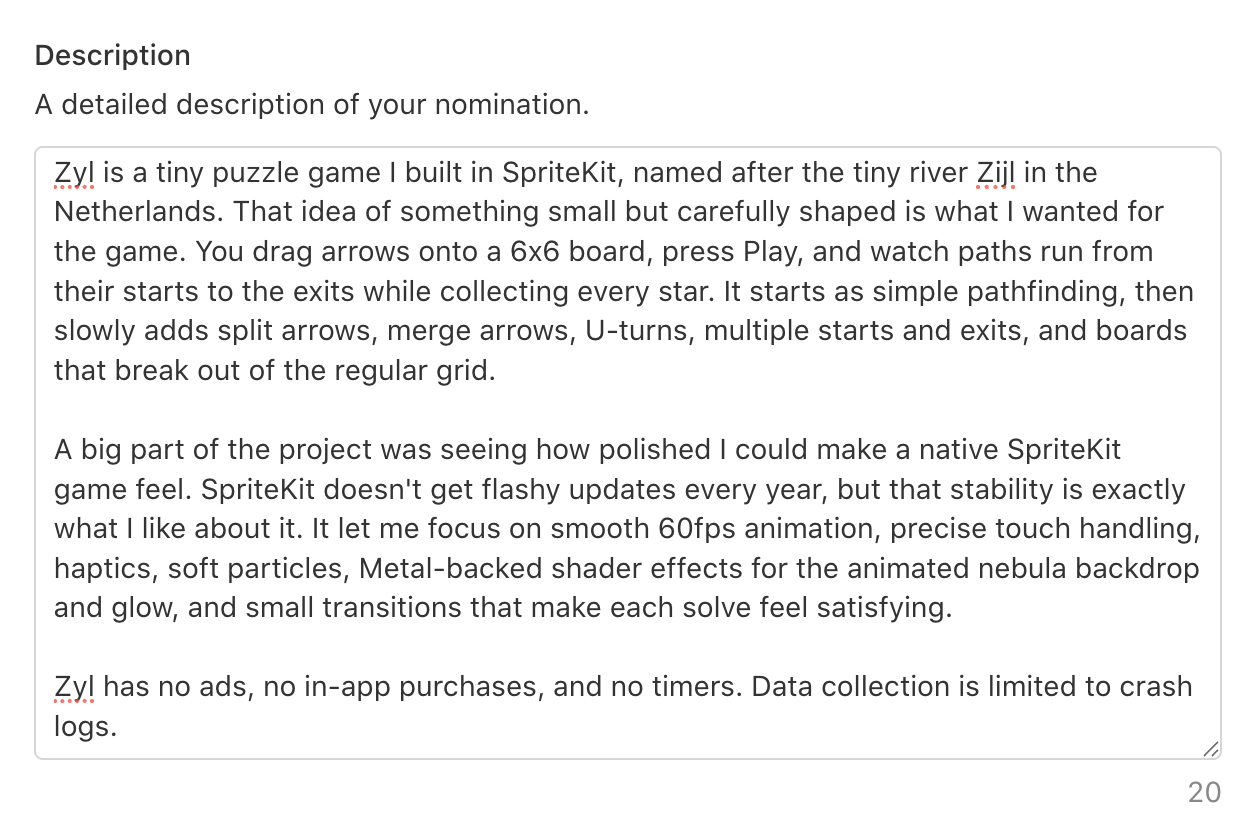
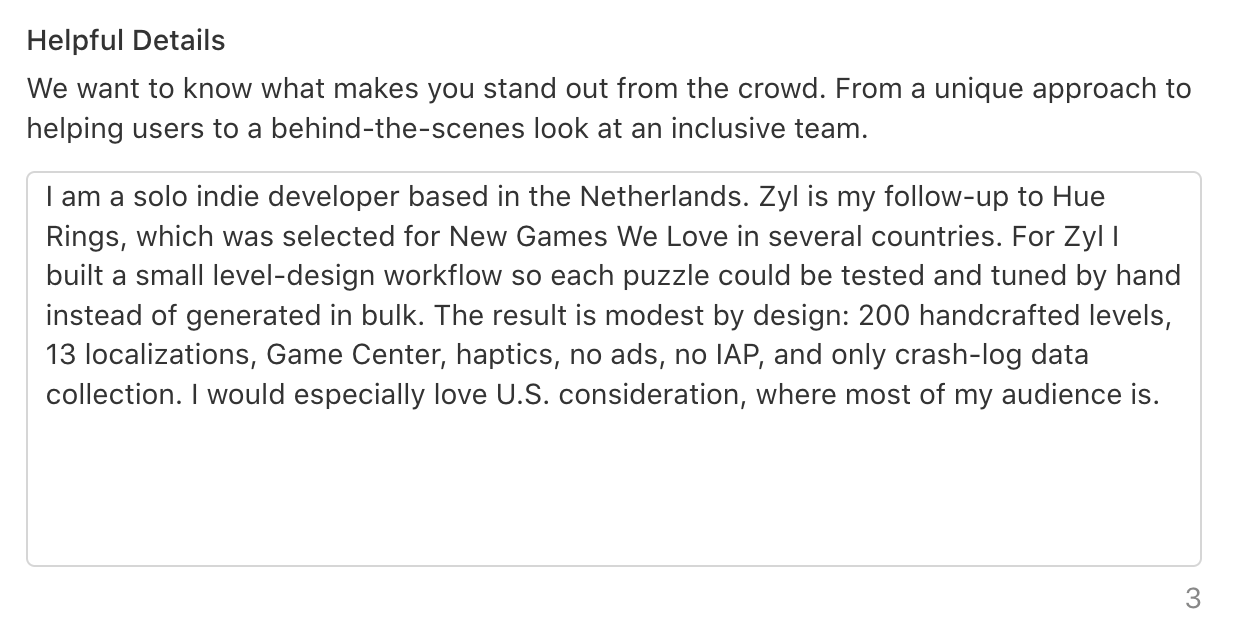
On May 26, I submitted Zyl through App Store Connect > Nominations. Hue Rings had been featured almost everywhere except in the US, where I had hoped most of the revenue would come from. I wanted to give Zyl a proper chance there, so I explicitly asked Apple if they could consider it for a US feature. Sometimes if you want something, you have to ask for it. :)
I wrote about the game, the 200 handcrafted levels (it now has 300), and how I built a small workflow to test and tune every puzzle by hand. I also mentioned the 13 localizations, Game Center, haptics, and the fact that the game has no ads or IAPs.
If you are submitting your own game for nomination, I would try to have the release date at least three or four weeks out. Ideally the game should already be functionally complete, and the final build should have been approved by App Review, even if it is not released yet. I also mentioned that Zyl is built with Apple-native technologies like SpriteKit. I cannot prove that this made a difference, but it felt worth including because it showed the game was made specifically for the platform.
On June 11, I received an email from Apple saying that Zyl might be featured. I did not have many expectations for this game, so that already made my day. I posted about it on Reddit, and that post ended up getting over 100 upvotes, making it one of my best-performing posts this year. Success compounds sometimes.
Apple requested a universal feature banner image and a gameplay video for the Games app. I spent the rest of the day making them, making sure everything important fit in the safe area, and submitted the assets a few minutes before the deadline. Those assets were later used in the Games app feature at launch.
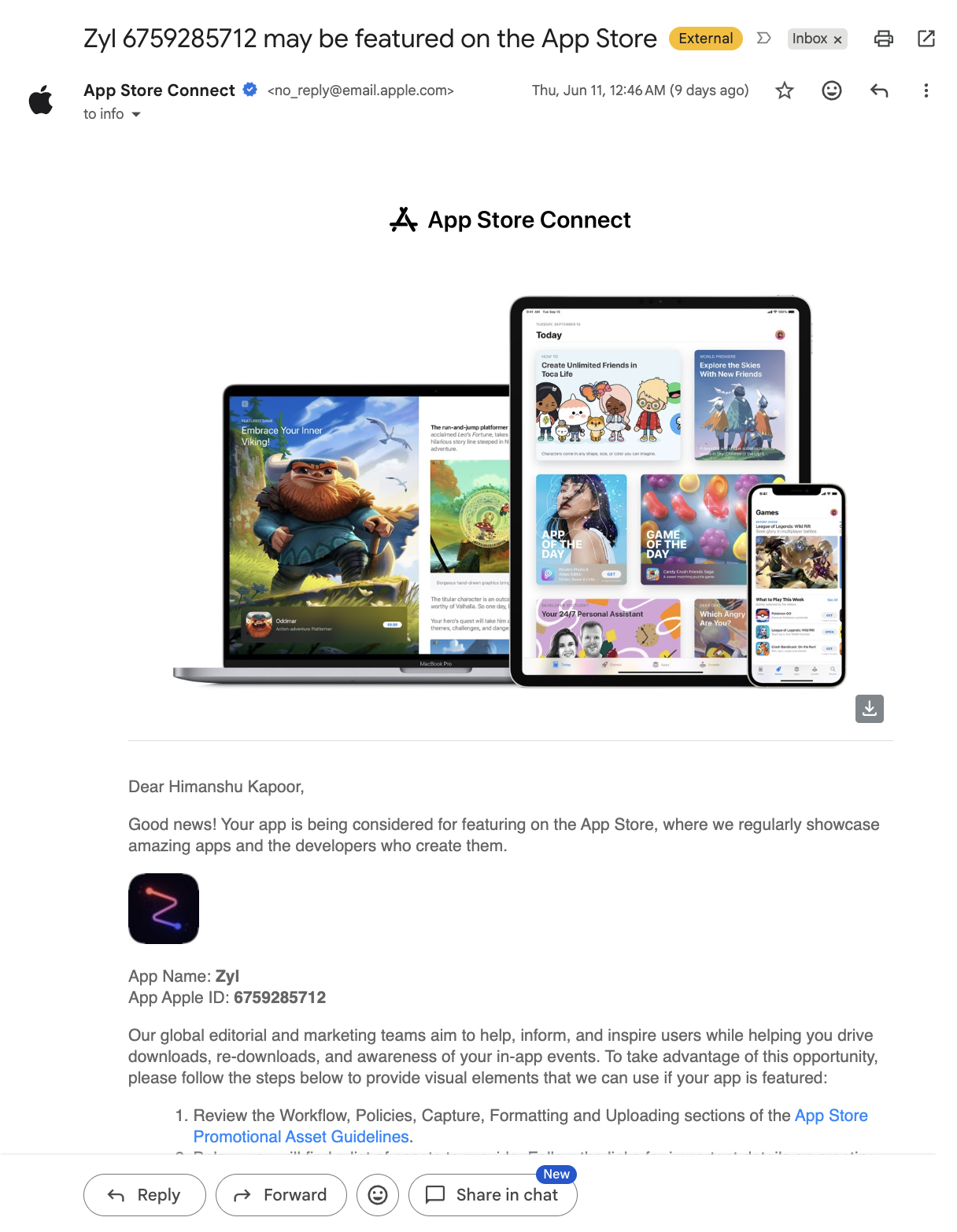
That email did not guarantee anything. I still did not know what would happen when the game came out on June 18.
On release day, Zyl appeared in a large banner at the top of the US App Store Games page. I was hoping Apple would follow through after requesting the feature assets, but that email was not a guarantee. I had also seen a few examples of developers being asked for assets and then not being featured, so the uncertainty kept me up most of the night. During the day, I kept refreshing the App Store every few minutes. I had even saved screenshots of the Games page from the day before, so I could tell if Apple had updated the page and featured new games without including mine.
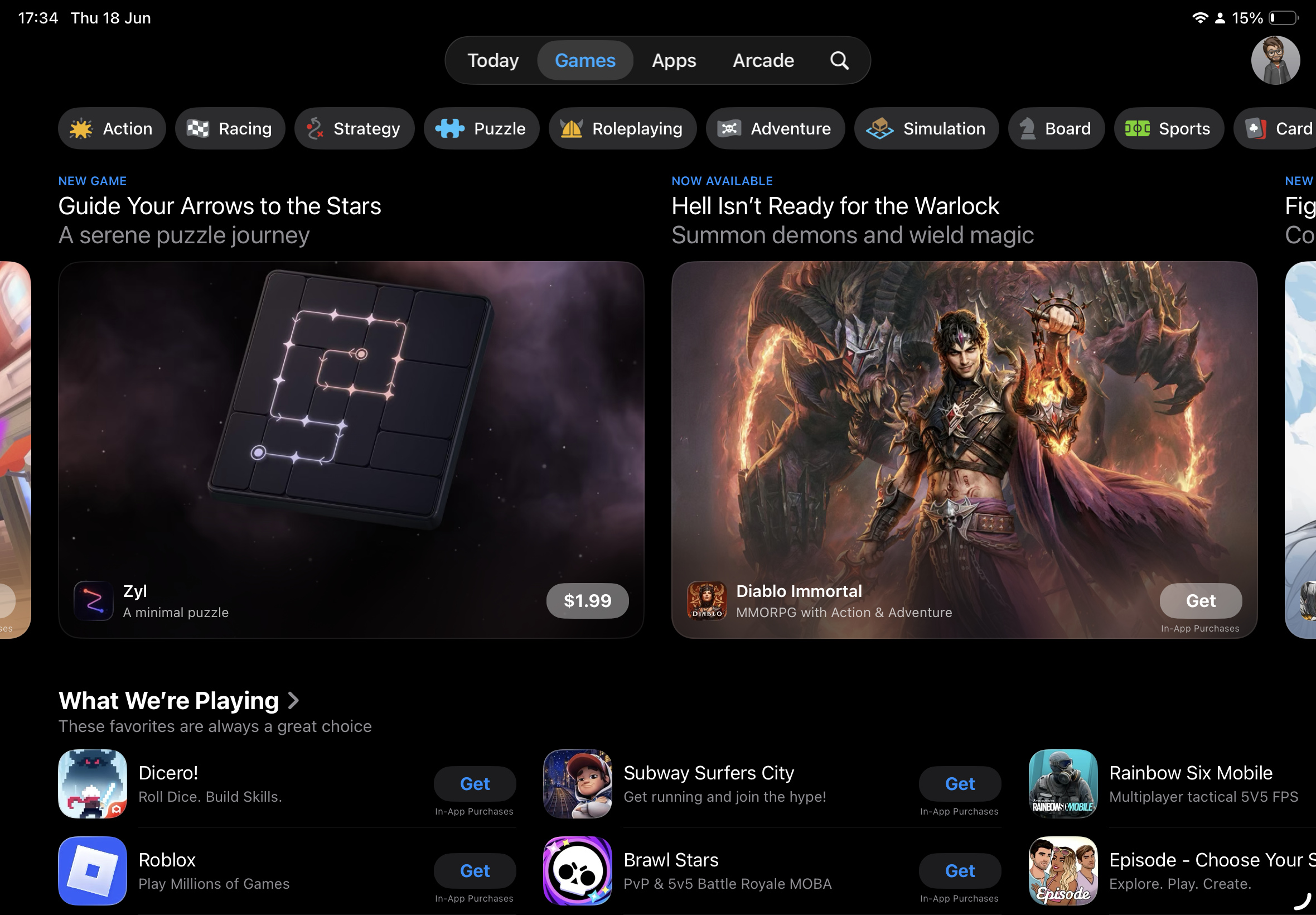
The placement was almost the opposite of Hue Rings. Hue Rings was featured in nearly every country at launch, but not in the US. Zyl was featured only in the US App Store, but it was a much larger placement: the top Games banner, New Games We Love in both the App Store and the Games app, and a dedicated US App Store story.
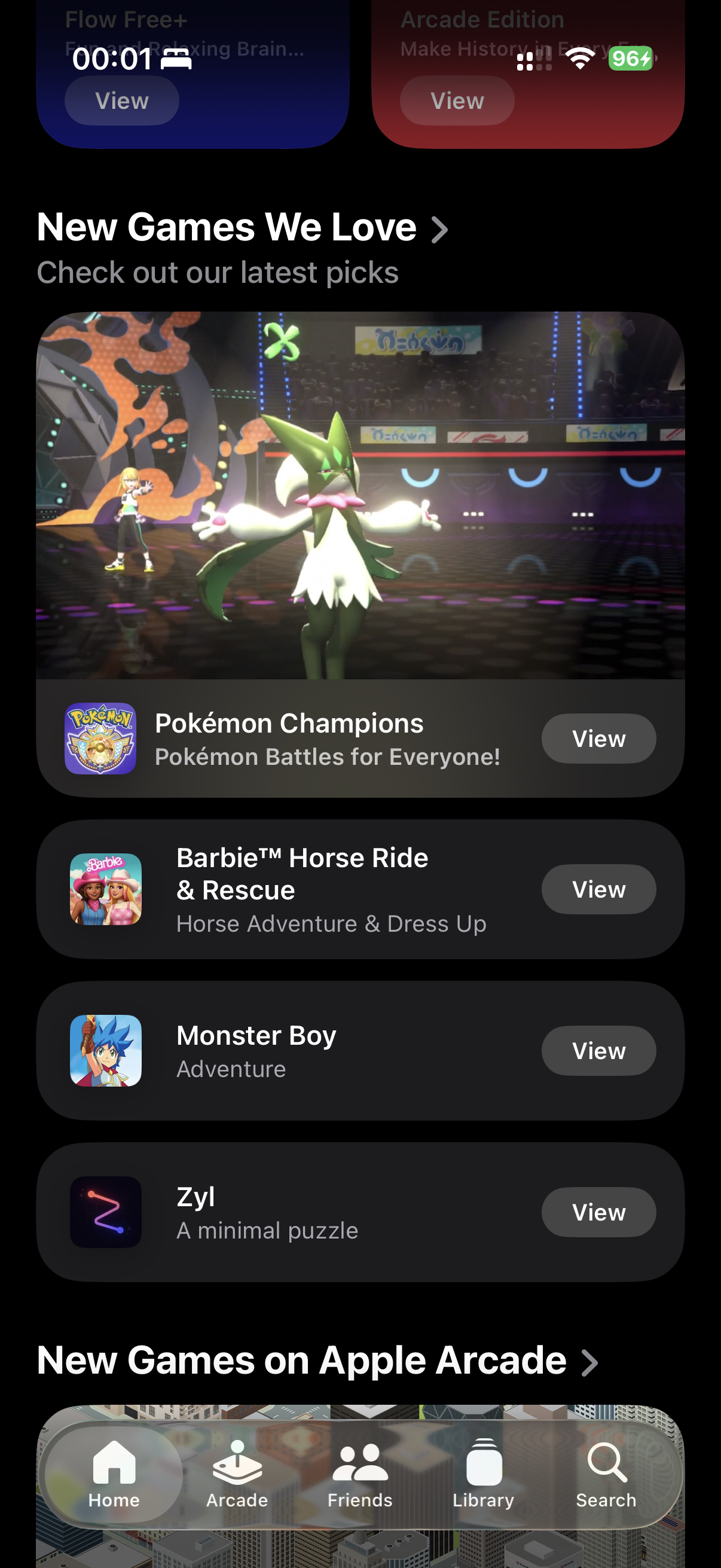
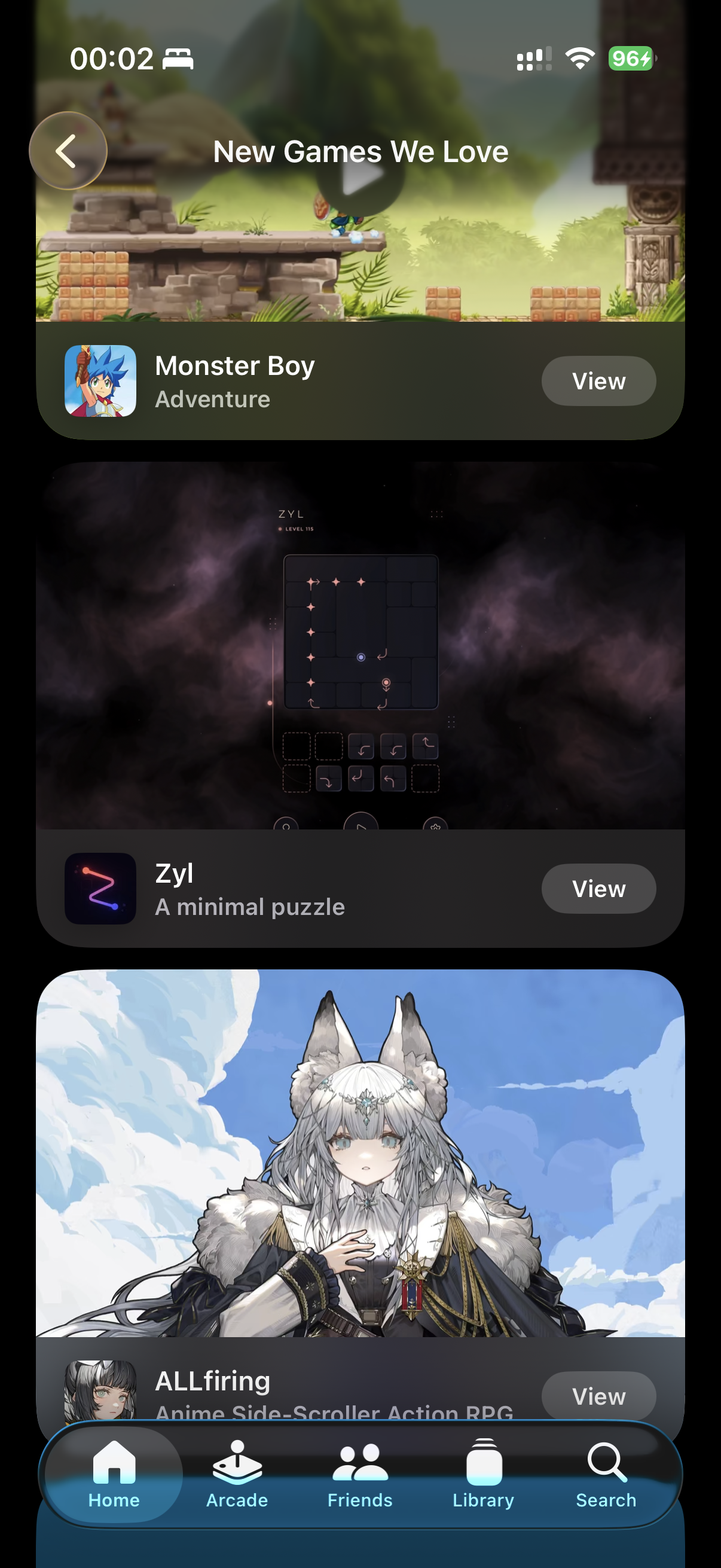
I am proud to say that all three games I have released have now found their way into App Store feature placements. I have added a small App Store recognition section to each game's page on this website as well. As a solo developer, I like keeping track of those moments.
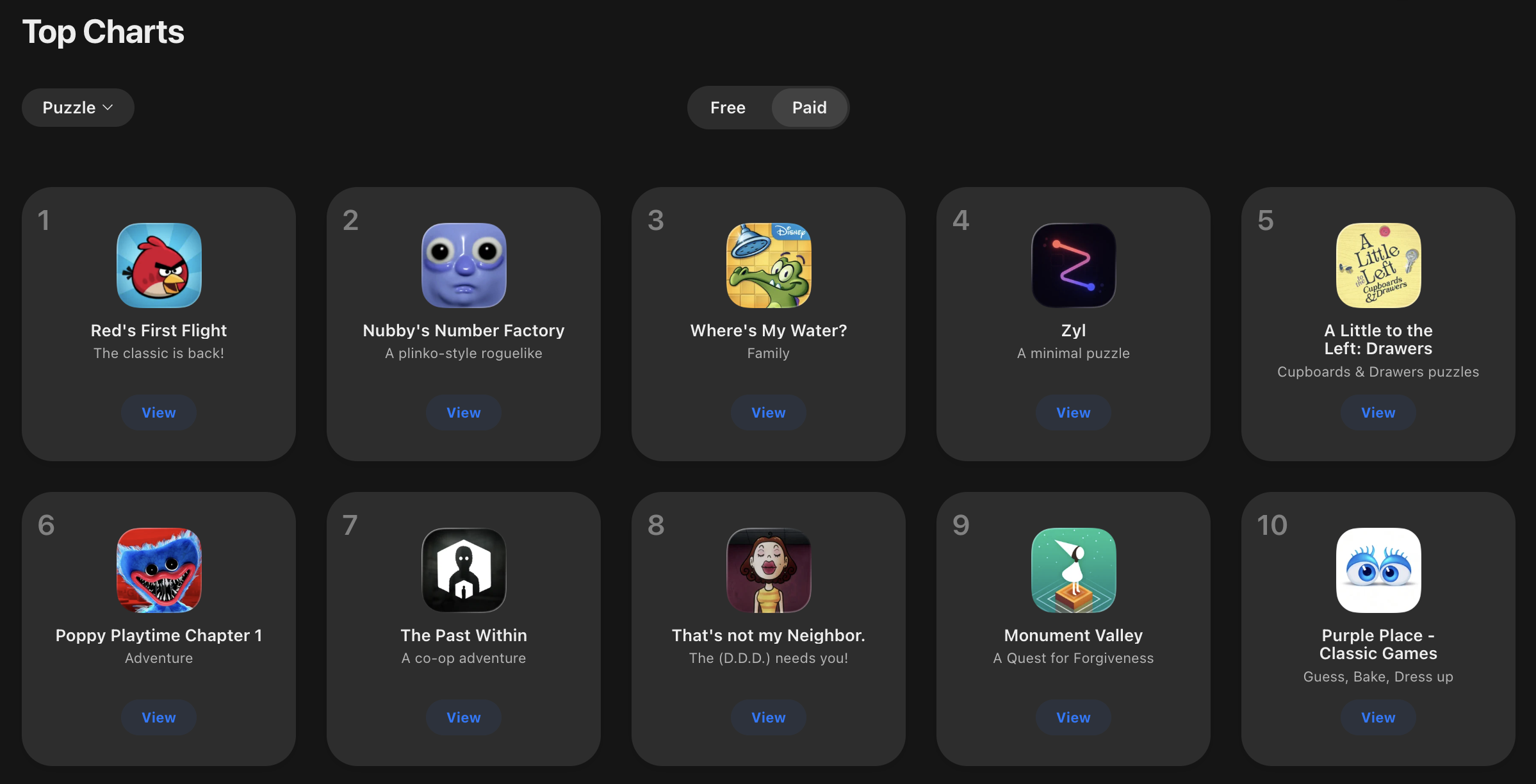
Two days after release, Zyl reached #4 in the US paid puzzle chart. It is sitting next to games I have known for years. For a small puzzle game made by a solo developer, that is honestly insane.
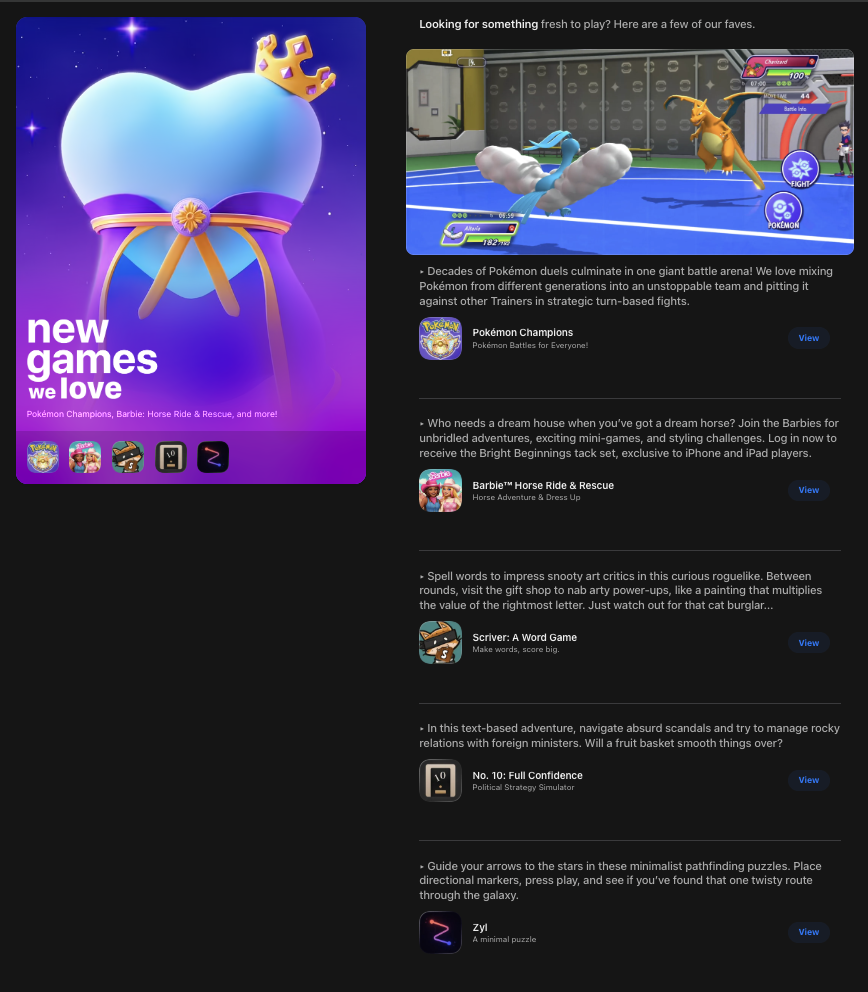
Zyl also appeared in Apple's US New Games We Love story. Apple featured five games in the story, and three of them are premium games made by solo developers like me. The story is US-only, so it may not open on an iPhone outside the US, but it should still open on a laptop or desktop.
In a time when so many mobile games lean on free-to-play monetization and psychological tricks, I am glad there are indie developers going against the wind and making premium mobile games with no ads. I am even more glad to see Apple recognizing them.
The three premium solo-dev games in the story were:
- Scriver: A Word Game, a word strategy game.
- No. 10: Full Confidence, a simulation strategy game.
- Zyl, my puzzle game.
In hindsight, I probably should not have launched in the same week as a major game like Pokémon Champions. Lesson learned for next time.
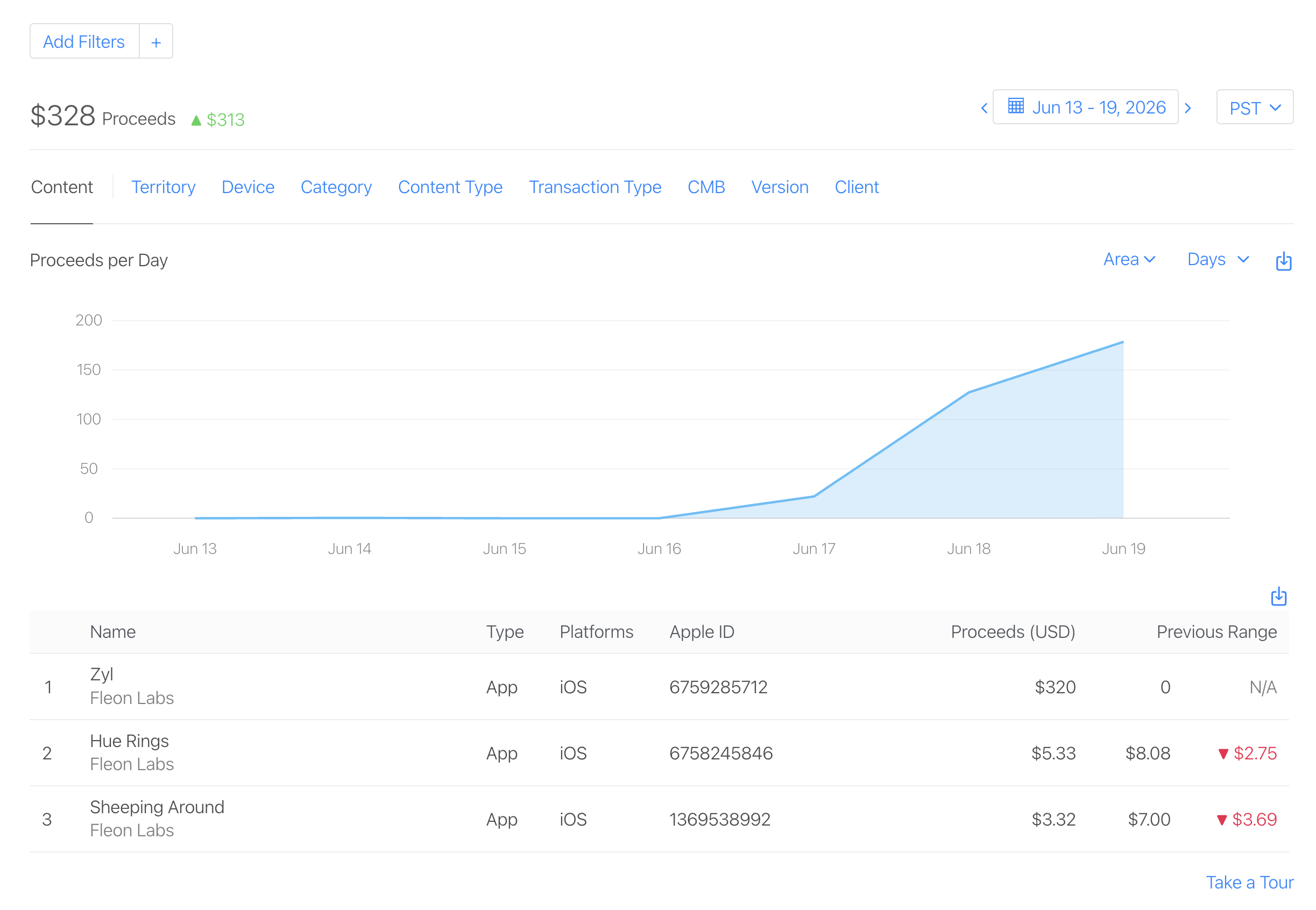
By the end of day yesterday (June 19, PST), App Store Connect showed $320 in proceeds from Zyl, including pre-orders. I know it is very early and charts move quickly, but this is already more than I expected. In less than two days, Zyl has already surpassed what Hue Rings made in revenue since it's release.
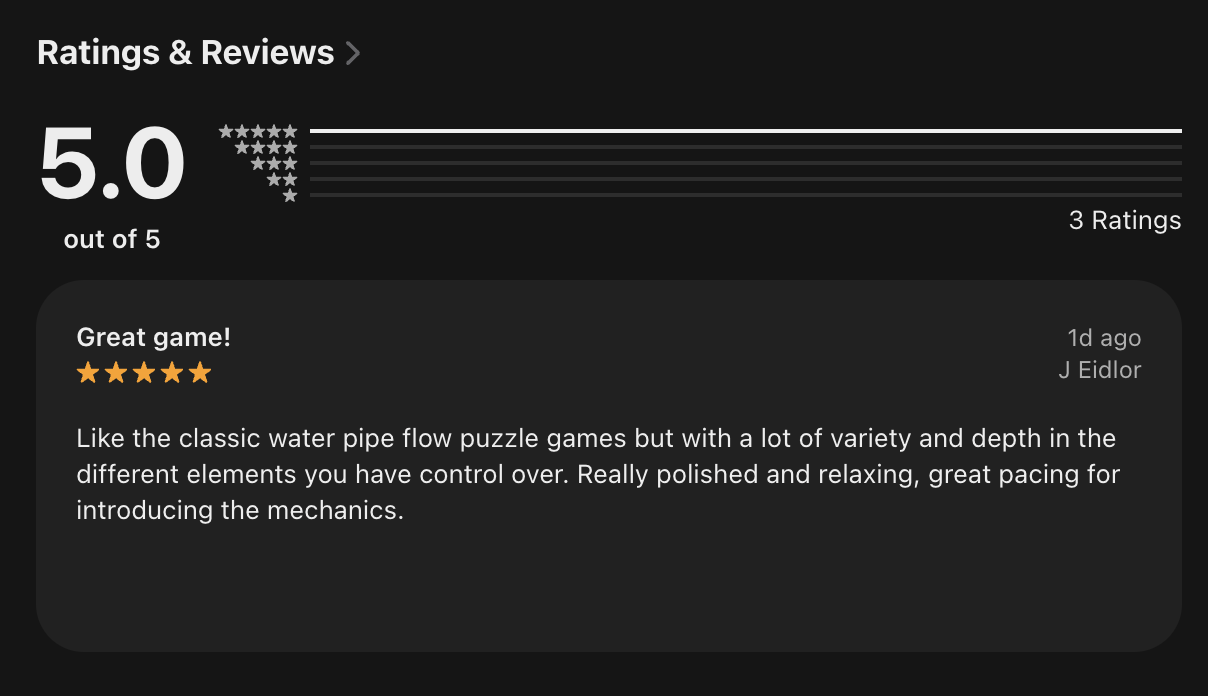
The first ratings and reviews are also coming in. There are only three ratings so far, but both are five stars. The only review so far is also positive, so that's nice as well.
Thanks to everyone who pre-ordered, downloaded the game, shared a post, or tried the TestFlight build. If you like relaxing puzzle games, you can get Zyl on the App Store:

Comments