One month of Zyl: revenue, bundles, and a new game announcement
One month after Zyl's release, I look at proceeds, pricing benchmarks, bundle sales, and share a first look at my next premium game, Phantom Words.
It has now been one month since Zyl was released. I wrote about the launch two days after it came out, when it had reached #4 in the US paid puzzle chart and App Store Connect was showing around $320 in proceeds. That was a very early snapshot, taken while the launch feature was still doing most of the work.
Now there is enough distance to see the launch curve more clearly. For the numbers in this post, I am using June 17 through July 17. This includes the release and pre-order activity that Apple reports from June 17, and gives me one complete month of data. During that period, Zyl generated €1,102.73 in Apple-reported proceeds (approximately $1,260.76).
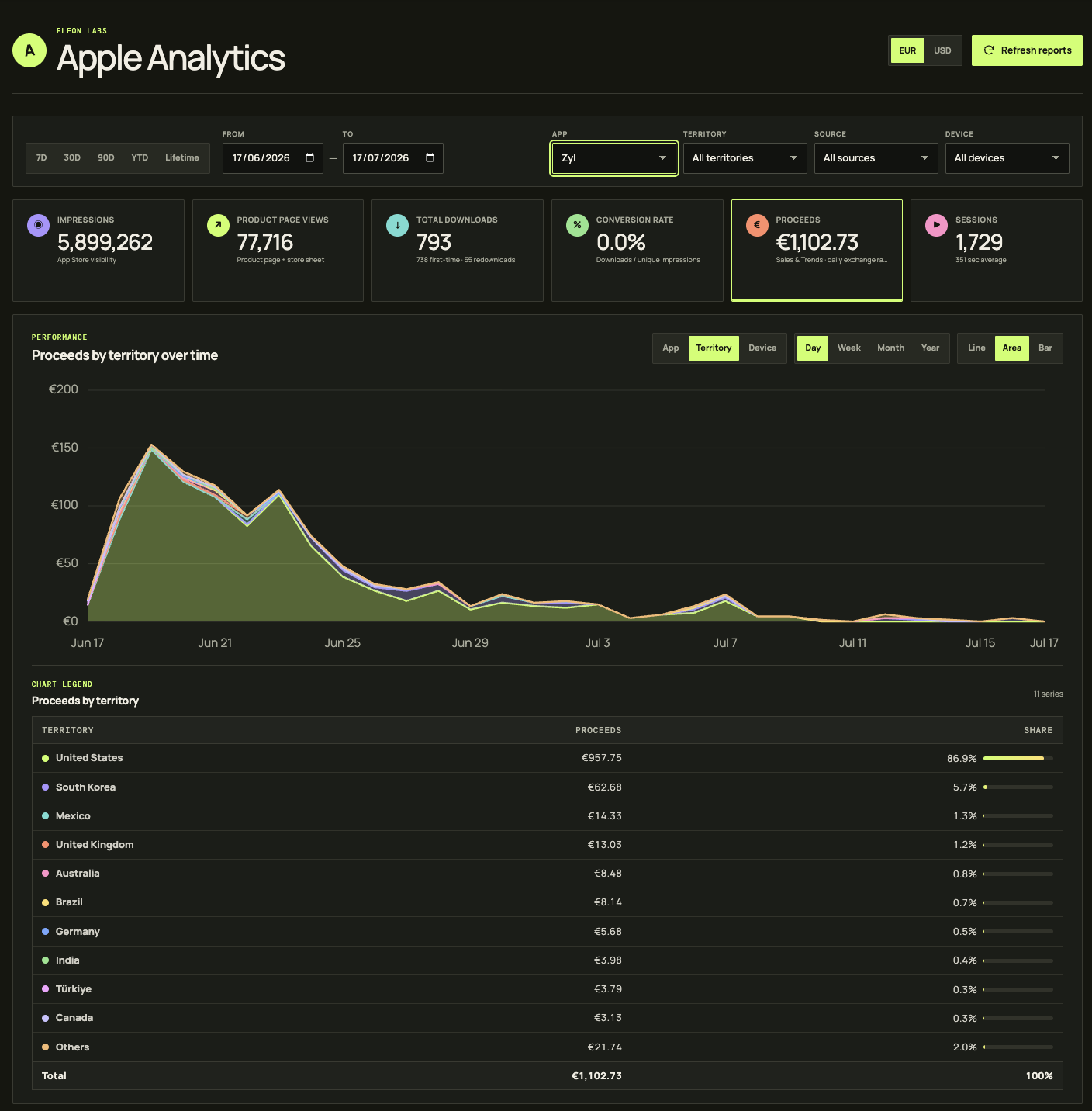
The launch week was responsible for €731.01, about two-thirds of the month's Zyl proceeds. That is the familiar launch curve: a large spike while the App Store feature is fresh, followed by a much longer and smaller tail. By the second half of the month, some days brought in only a few euros and a few brought in nothing at all.
That drop is not surprising, but it is useful to see how quickly it happens. A feature can create a great launch, but it does not create a permanent level of sales.
The US App Store feature shaped almost every number in this report. Out of 793 downloads, 681 came from the United States. The US also accounted for €957.75, around 87% of Zyl's proceeds.
During its first week, Zyl had both a large banner feature and a place in New Games We Love in the US. The banner lasted only that week, but the curated list placement continued for longer. In the following weeks, the App Stores in South Korea, Mexico, and Brazil also picked up Zyl for their local New Games We Love collections. The large launch placement was brief, but the smaller list features gave the game a longer tail across several storefronts.
The 5.9 million impressions look quite large next to 793 downloads. Almost two million of those impressions came on June 19 from the US New Games We Love story feature. Zyl's icon appeared across the App Store home page, so almost anyone opening the App Store would see it regardless of what they intended to do next. That kind of visibility is very different from someone actively searching for a premium puzzle game, and probably explains the almost 0% conversion rate.
Zyl was also featured next to Pokémon Champions, which may help explain why so many impressions did not turn into product page views. If someone opened the App Store and saw a major Pokémon release next to an unfamiliar game from a solo developer, it is not difficult to guess which one was more likely to get the tap. I am still very happy with the result, but it is another reminder that visibility and purchase intent are different things.
The big lesson to learn here is that players prefer games with an identity. Zyl's icon and UX made it feel more like an app than a game. While this may be normal for minimal puzzle games, the norm that mobile gamers expect is having characters. Which is why my next game will include a mascot (more on it later).
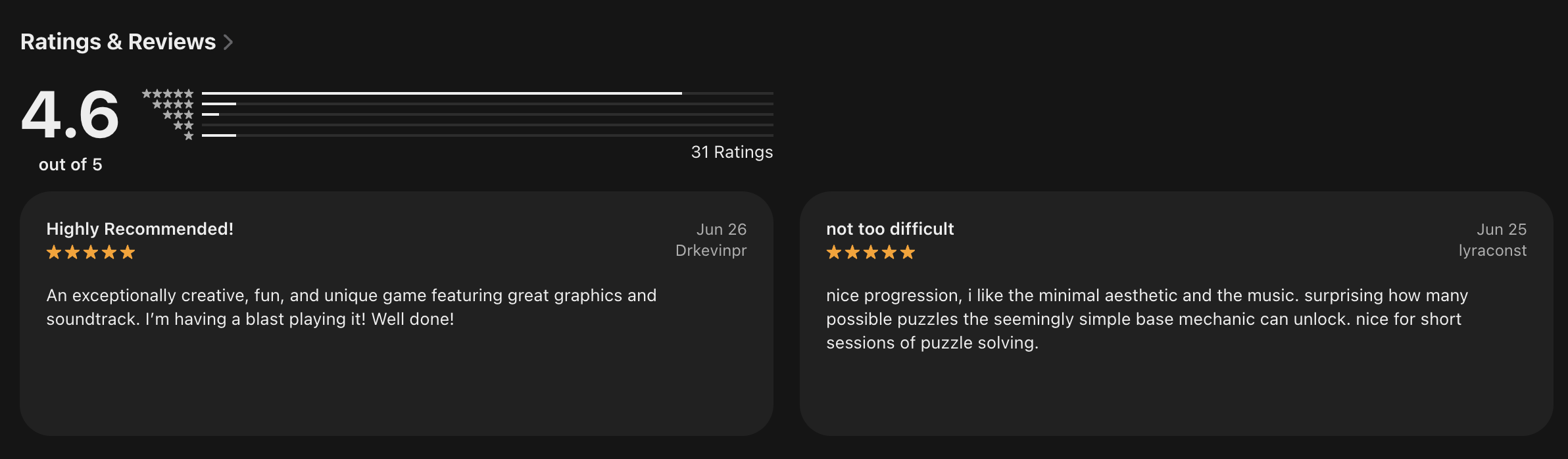
The response from players has also been encouraging. One month in, Zyl has a 4.6 out of 5 rating from 31 ratings on the US App Store. Ratings are specific to each storefront, so this does not include feedback from every country, but the US is where most of the game's downloads came from.
A few days after launch, I created two App Store bundles: Puzzles by Fleon and All Games by Fleon. I had never paid much attention to app bundles before because I only had one game on the App Store until recently.
The bundles did better than I expected. During this one-month window:
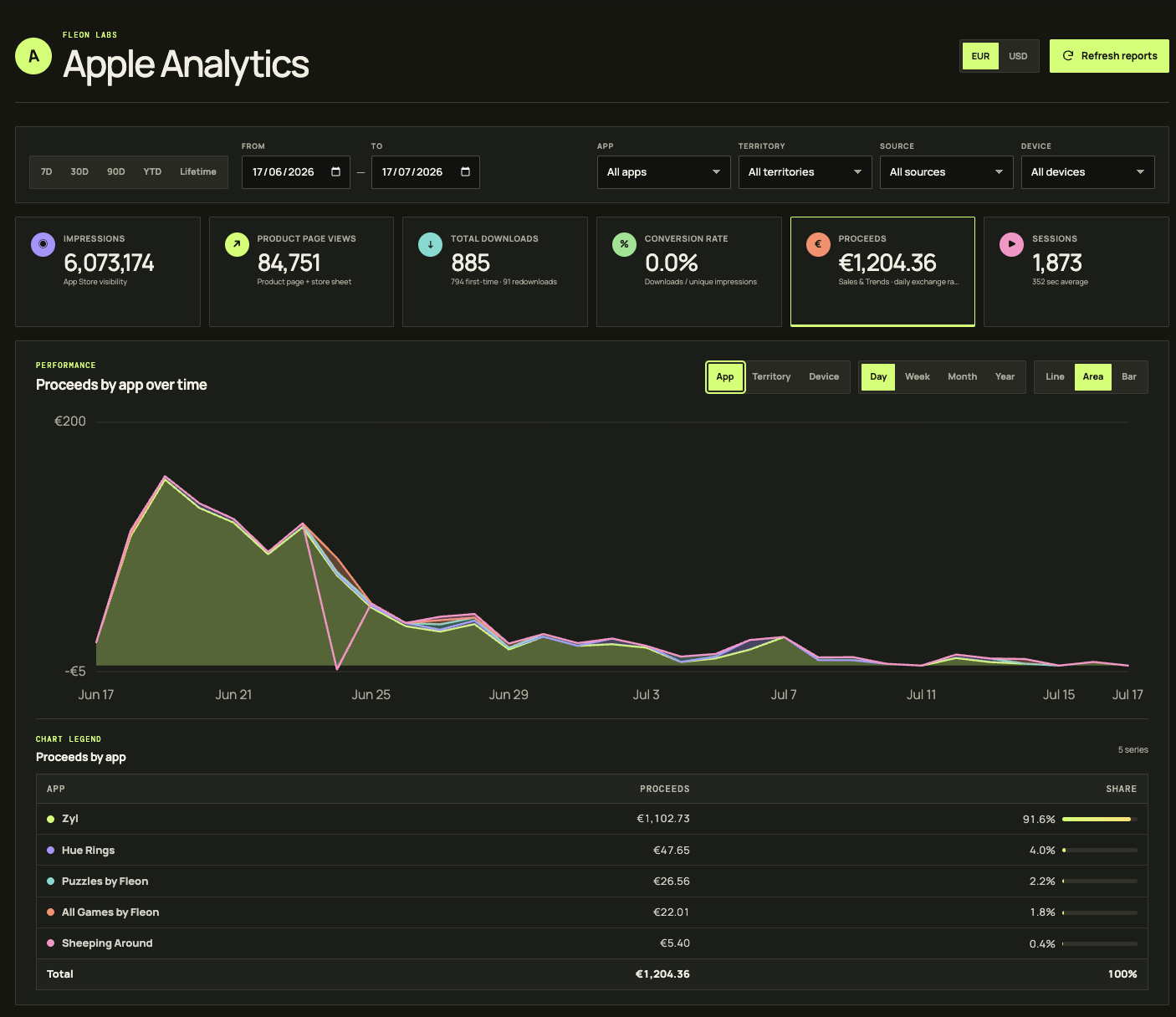
- Puzzles by Fleon sold 12 copies and generated €26.56 in proceeds.
- All Games by Fleon sold six copies and generated €22.01 in proceeds.
That is 18 bundle sales and €48.57 in additional proceeds. The numbers are not high compared with Zyl's standalone sales, but creating an App Store bundle is also quite low effort. There was no new game development involved, so the additional sales made it worth doing. The bundles also gave people who wanted more than one of my games a straightforward discount.
Bundles are also nice for players as much as the are for the developer. If you already bought Sheeping Around and Hue Rings, buying All Games by Fleon bundle essentially lets you get Zyl for free since the bundle is priced at a discounted rate almost equivalent to the price of those two games combined. When you purchase a bundle, Apple automatically refunds you the price you paid in the past for individual games in that bundle as a part of a CMB (complete by bundle) purchase.
Also, I believe that if you buy a bundle today, and later I add a new game to it, players get that new game for free (though I could be wrong on that, we'll see).
The only App Store benchmark I want to focus on is proceeds per paying user. This peer group compares Zyl with paid puzzle apps that do not offer in-app purchases, across apps with low, medium, and high download volumes. That makes it a useful, if still approximate, way to look at pricing.
The big learning lesson for me was finding out that $1.99 is 25th percentile of paid game pricing in the puzzle category. The median price for a paid puzzle game is $2.99 and 75th percentile is $4.99.
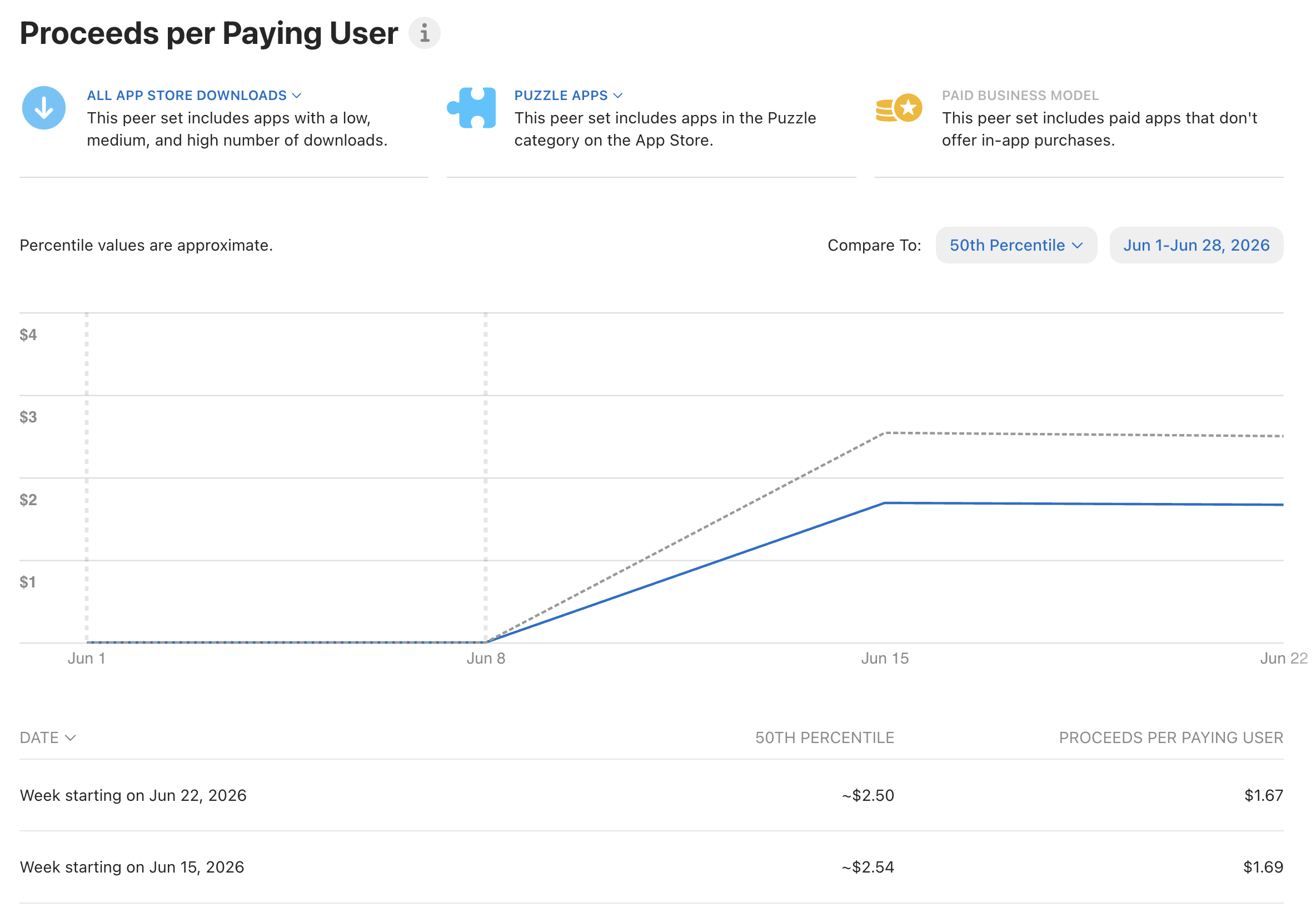
Before launch, I considered raising it to $2.99 but decided to keep the lower pre-order price. The benchmark suggests that $2.99 would not have been unusually expensive; it is probably close to the middle of the market. I still think keeping the launch price was the fair decision, but this gives me useful context if I price a future premium puzzle game.
Financially, Zyl is still a small indie game. One month of proceeds is not life-changing, and the graph makes it obvious how dependent the result was on Apple's US feature. Without that placement, the outcome would have been very different.
But it has already done much better than I expected. It passed Hue Rings' lifetime revenue almost immediately, proved that a simple premium price can work for one of my small puzzle games, and gave me a much clearer view of what an App Store feature can and cannot do.
The part I am happiest about is that the business model stayed simple. Zyl has no ads, no IAPs, and no retention tricks. People paid once, played the game, and some of them went on to buy a bundle containing my other work. For the kinds of games I want to make, that feels like a much healthier foundation than trying to turn every player into a recurring revenue stream.
In part, this also furthers my goal of building a portfolio of premium games that stand against unusually predatory monetization tactics most mobile games lately have started to employ.
I do not know how long the sales tail will last, since the game is still featured in at least one country (South Korea), but I am glad I can now measure it with a full month rather than a release-week spike. I will keep watching the numbers, updating the game, and using what I learned here for whatever I make next.
If you enjoy quiet puzzle games, you can get Zyl on the App Store:

For my next game, I'm diverging a bit with a word/puzzle game: Phantom Words. The idea is still early, but I am exploring a board of hidden ghost tiles, letter tiles, and different ways to play short word-building sessions. These are the first design mockups, so the details may still change as I build and test it.
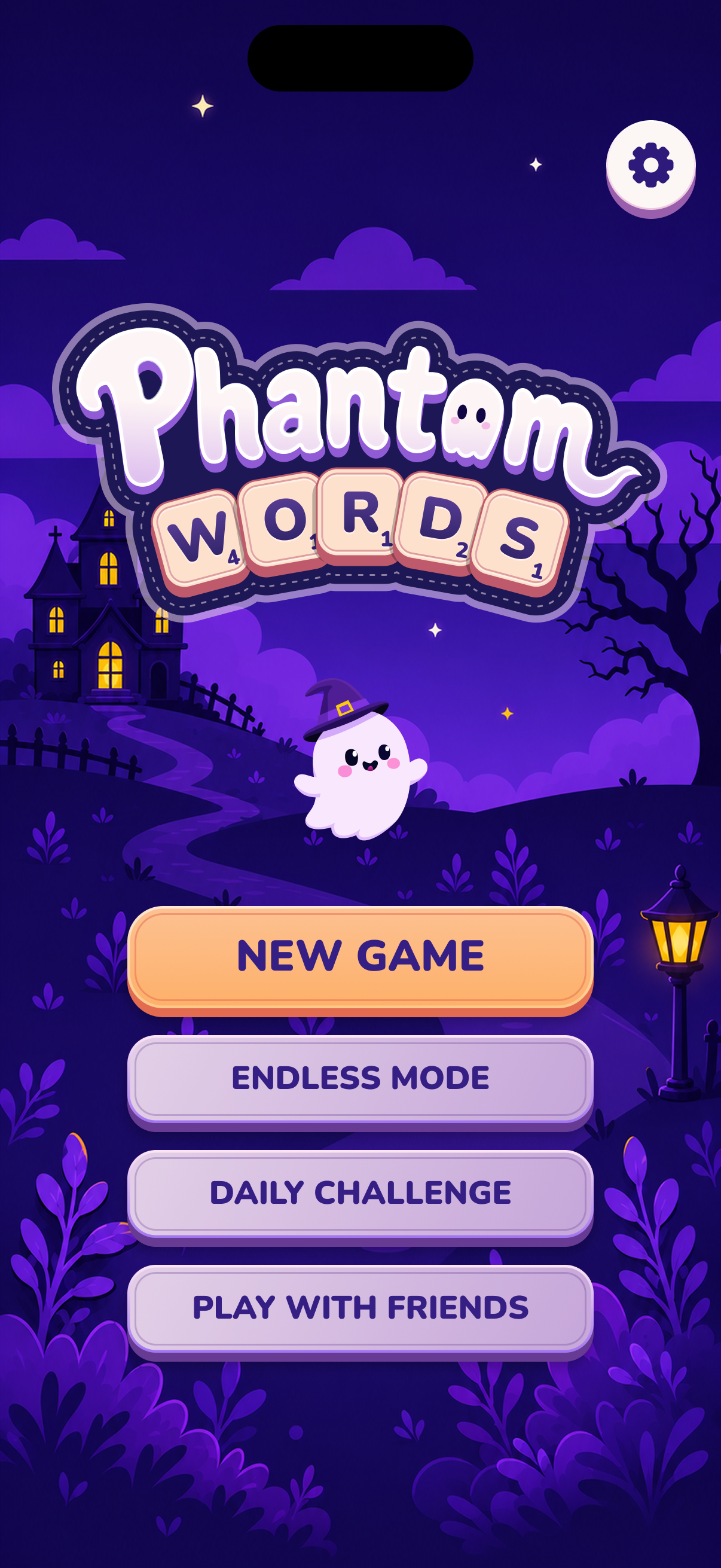
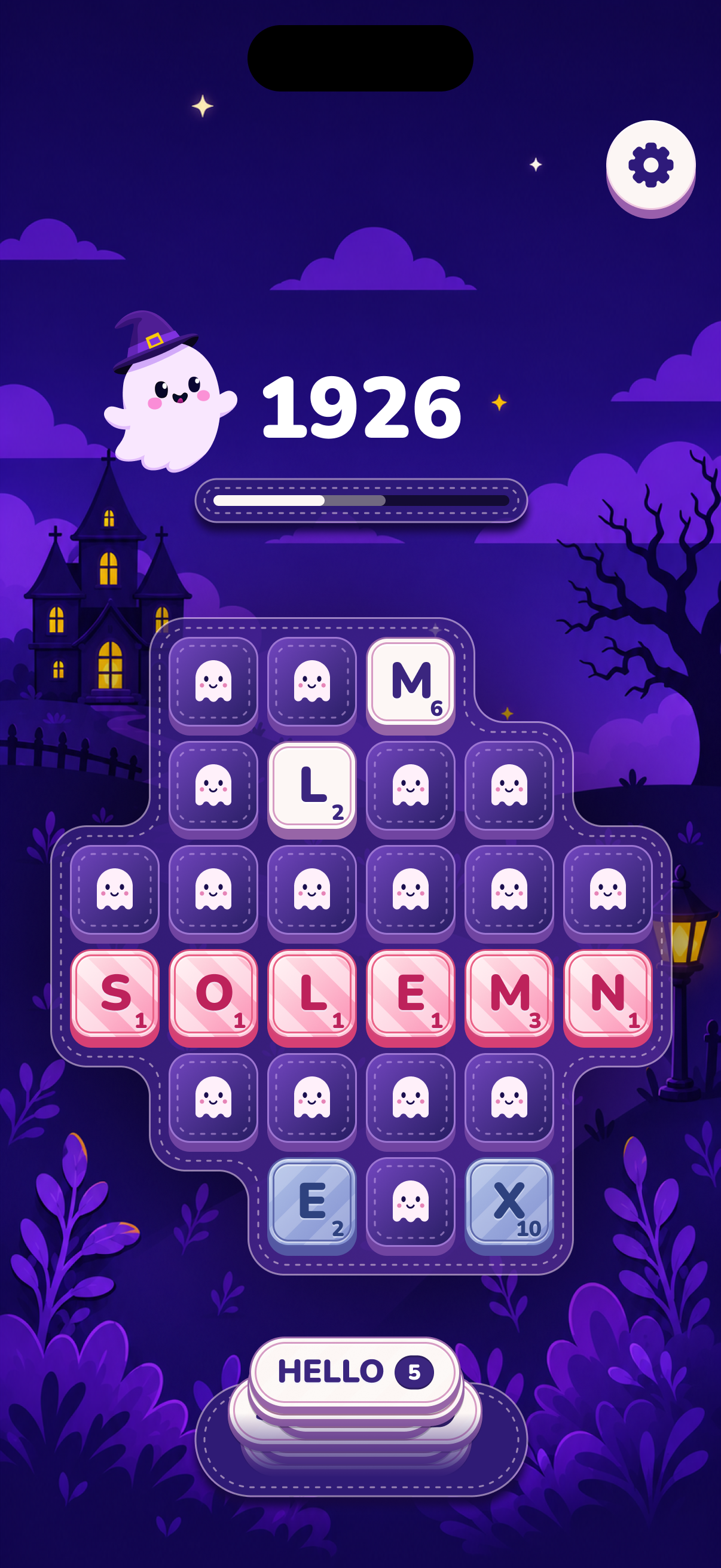
Phantom Words will also be a premium game. This time I am planning to price it at $2.99, with no ads or in-app purchases. That decision comes directly from the median puzzle games proceeds benchmark above.
More broadly, Phantom Words is part of what I hope will be a gamedev comeback for me. My goal for this year is to try to exceed the revenue I made from Sheeping Around in 2019, not by expecting one game to do all the work, but by building and releasing multiple premium games.
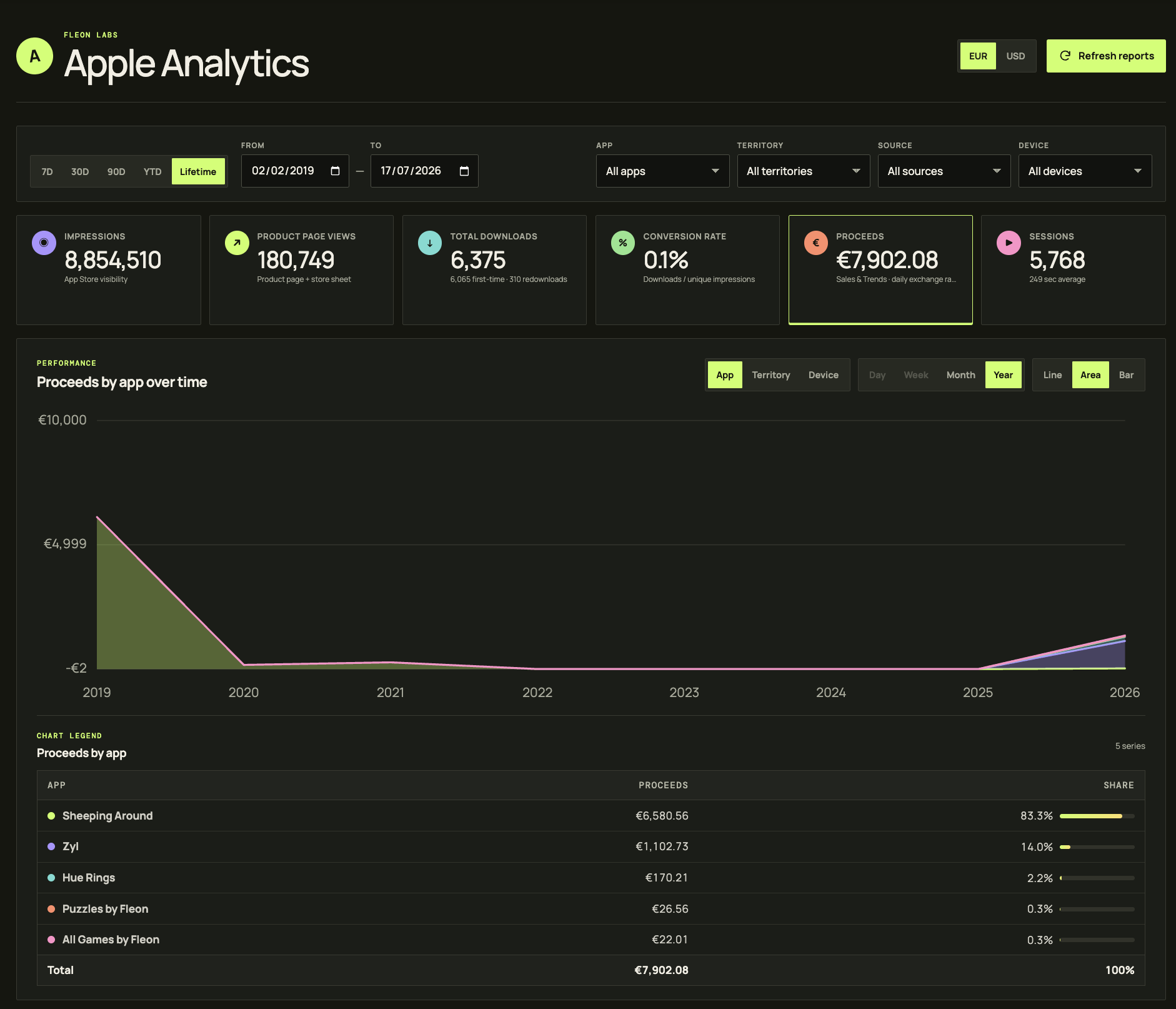
The mobile games market is quite different today from what it was in 2019. The App Store is more crowded, discovery has changed, and there is no guarantee that this approach will work. But between Hue Rings, Zyl, Phantom Words, and whatever comes after, I still think it is worth a try.
Comments