GRAVEFIRE: The Realm of Ekothis
A worldbuilding post for Ekothis, the burned realm at the center of GRAVEFIRE, including Motonia, Zebathen, the wilderness, and No Man's Land.
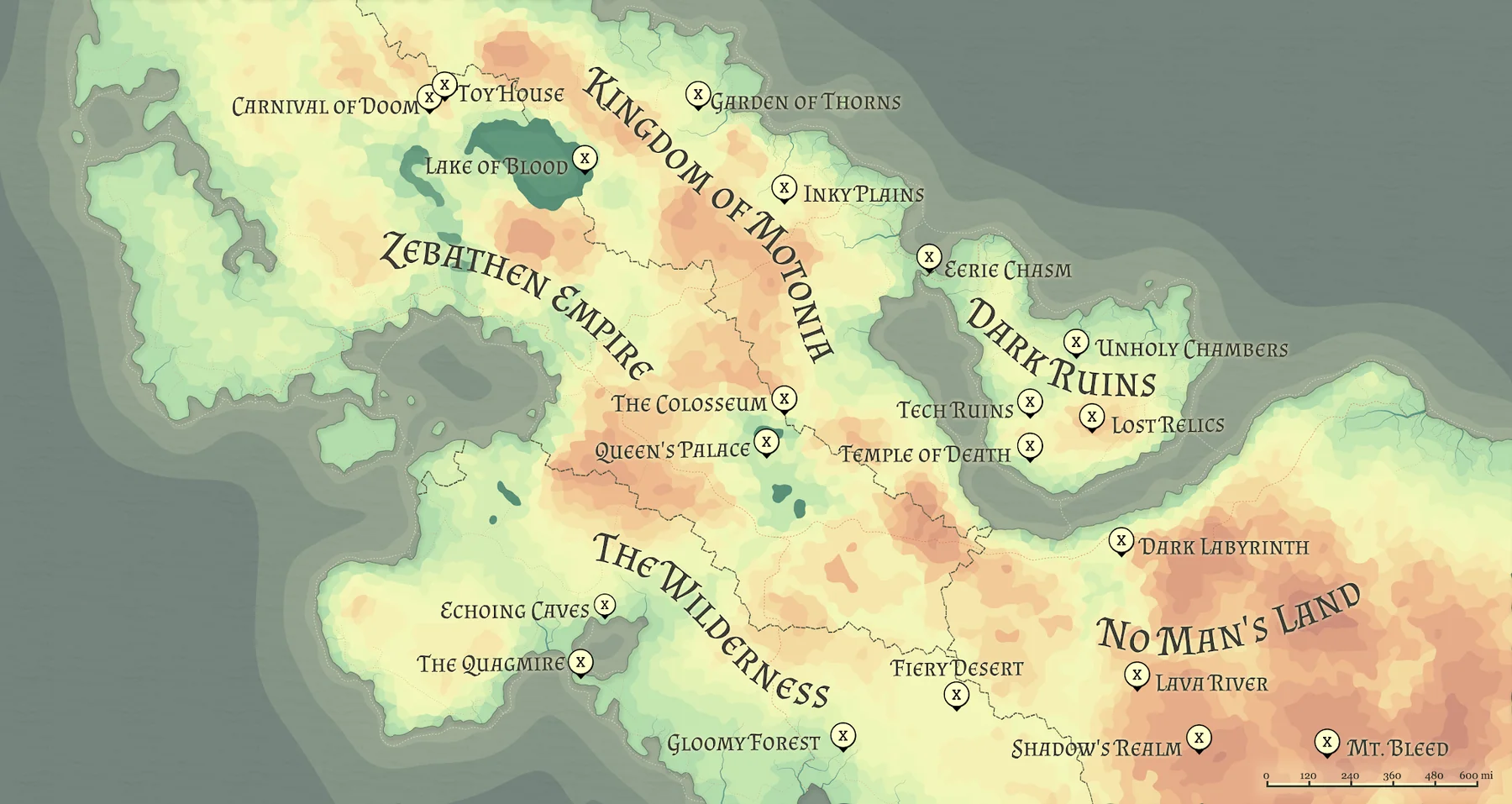
The Grave Fire happened in the Realm of Ekothis, a remote region once ruled mostly by two powers: the Kingdom of Motonia and the Zebathen Empire.
Before the fire, Ekothis was divided. Motonia was the older realm, founded by sailors who crossed the Eastern Sea and built their capital on the island fortress of Cliften. Zebathen rose two hundred years later as a mainland alliance against Motonian expansion. Around them were wilderness tribes, unconquered villages, and the No Man's Land near Mt. Bleed.
The fire, believed to have begun near No Man's Land as a volcanic eruption, tore through the continent. Motonia was destroyed completely. Zebathen was left in ruins. What remained was ash, reanimated dead, trapped souls, and a few survivors trying to understand why they lived.
When Motonia began colonizing the mainland, many local kingdoms were too divided to resist. They fought among themselves while Motonian governors and soldiers took control of village after village.
The free kingdoms eventually united into an alliance. Highlord Zebathen of the River Kingdom gave that alliance direction. He brought artificers and alchemists from abroad, created new weapons and technologies, and forced the other chieftains to learn the same skills for the betterment of their own lands.
By the time he died, the alliance had become a political power that carried his name. His successors became the Empire of Zebathen, ruled by the Highlord's descendants alongside leaders of the remaining free tribes.
Zebathen expanded by freeing former Motonian colonies and assimilating more of Ekothis. The Empire discovered the Maker Tribe, descendants of the legendary builders of the gods. With the Makers enslaved and forced into service, Zebathen's power grew quickly. Everbrooke, once a tiny river settlement, became a capital that rivaled Cliften in splendor.
Zebathen also built the Colosseum of Eden. Motonian kings had watched warriors fight each other to the death, but Zebathen wanted something grander: a gauntlet where warriors fought Death itself.
The Colosseum's chief event was the Seven Rings of Death.
The first six rings were elemental trials: fire, lightning, earth, wind, ice, and water. The seventh was darkness, where the warrior's sight was taken away while traps and monsters from across the Empire waited.
Very few warriors ever cleared the seventh ring:
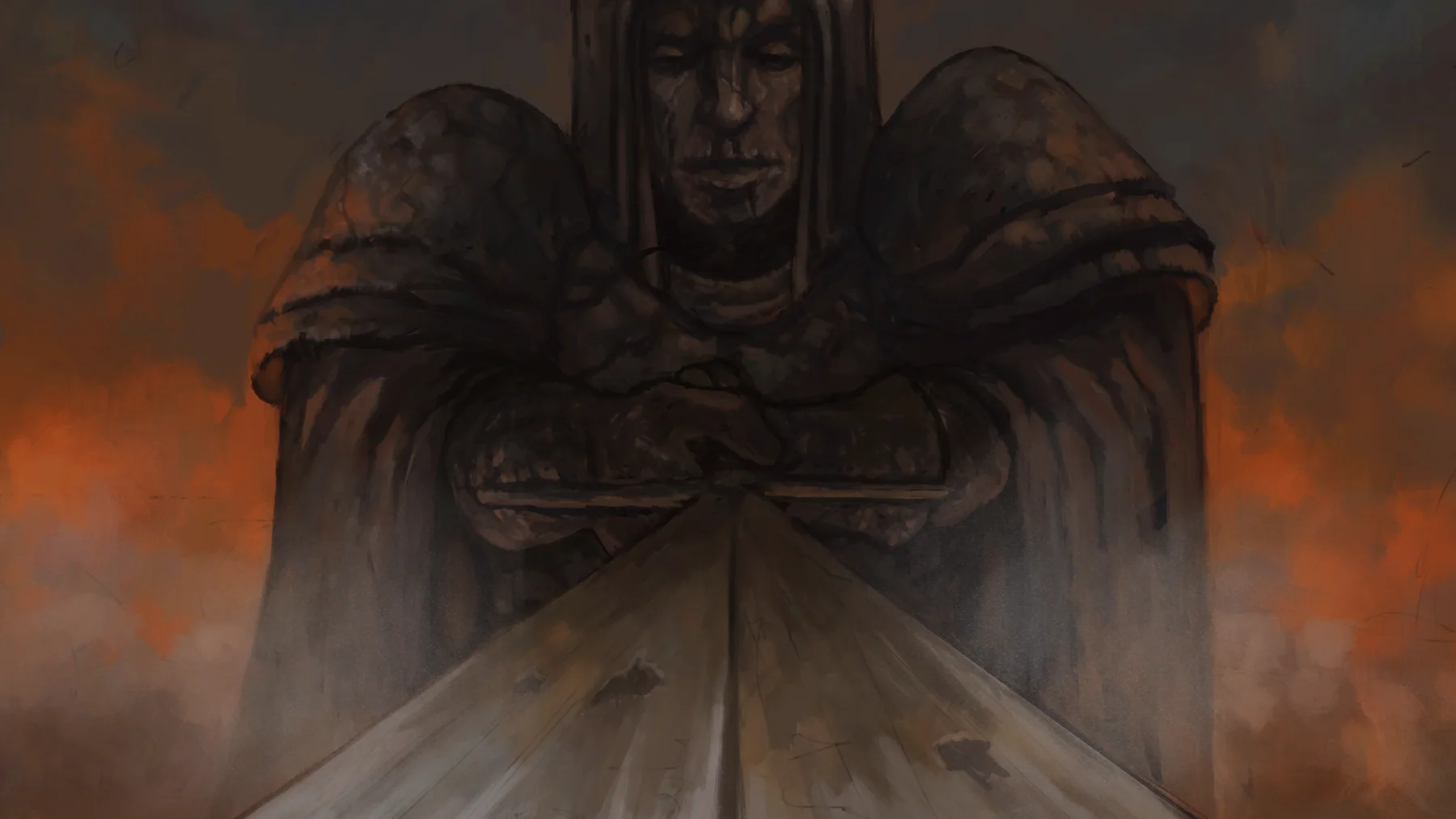
- Vorgak the Valiant, the Barbarian King, was the first.
- Isenbardus the Bold was second and became a celebrated general of Zebathen.
- Skull, a warrior from Motonia, became the third.
Their statues stood in the Colosseum, blades pointing inward over the Ring of Darkness.
The Motonians came from across the Eastern Sea. Their original homeland is never named in their histories or legends. No one knows why they fled it, but they wasted no time building Cliften into an impenetrable island fortress.
From Cliften, Motonia expanded into mainland Ekothis. It claimed colonies, demanded tribute, and placed governors over local states. Zebathen rose in response.
For centuries the two powers fought. Zebathen had technology, alchemy, and the Makers. Motonia had an unmatched military tradition and control over the rich gold deposits of the Great Chasm. Their rivalry became a stalemate.
When an earthquake destroyed Cliften and killed the royal family, the survivors moved the capital to Alnore. For the first time, Motonia crowned a king from outside the royal family, but real power shifted toward the merchants and politicians who controlled gold.
During this period, the Motonian army began building a strange beacon tower near Mount Bleed.
Not all of Ekothis belonged to Motonia or Zebathen. Some remote tribes and villages stayed independent. When Motonia first arrived, it contacted many native communities, and some became colonies. Others refused or were ignored. Zebathen later tried the same, with similar results.
Over time, these communities faded into obscurity in the wilds.
The wilderness contains several important regions:
- Echoing Caves, home of the Stoneglow Tribe and their glowing gemstones.
- The Quagmire, once a mangrove forest where Zebathen alchemists may have created experiments.
- Gloomy Forest, where Makers and Zebathen warriors died during Azroth's rebellion.
- Fiery Desert, once connected to the Maker Tribe's ancient history and later their extinction.
No Man's Land surrounds Mt. Bleed and the old watchtower.
Before the grave fire, the watchtower was a land lighthouse on the foothills of the dormant volcano. Officially, it gave Motonia strategic visibility. It could see incoming attacks from far away and give the kingdom time to respond.
Its real purpose was darker. Lord Dragos helped fund the lighthouse to uncover what lay below: an ancient library of dark magic and an ossuary filled with skulls from a long-lost civilization that once lived under the volcano.
The watchtower later became Ziena's prison, workspace, and signal point. From there, through the Eye of the Raven, she contacted survivors after the world burned.
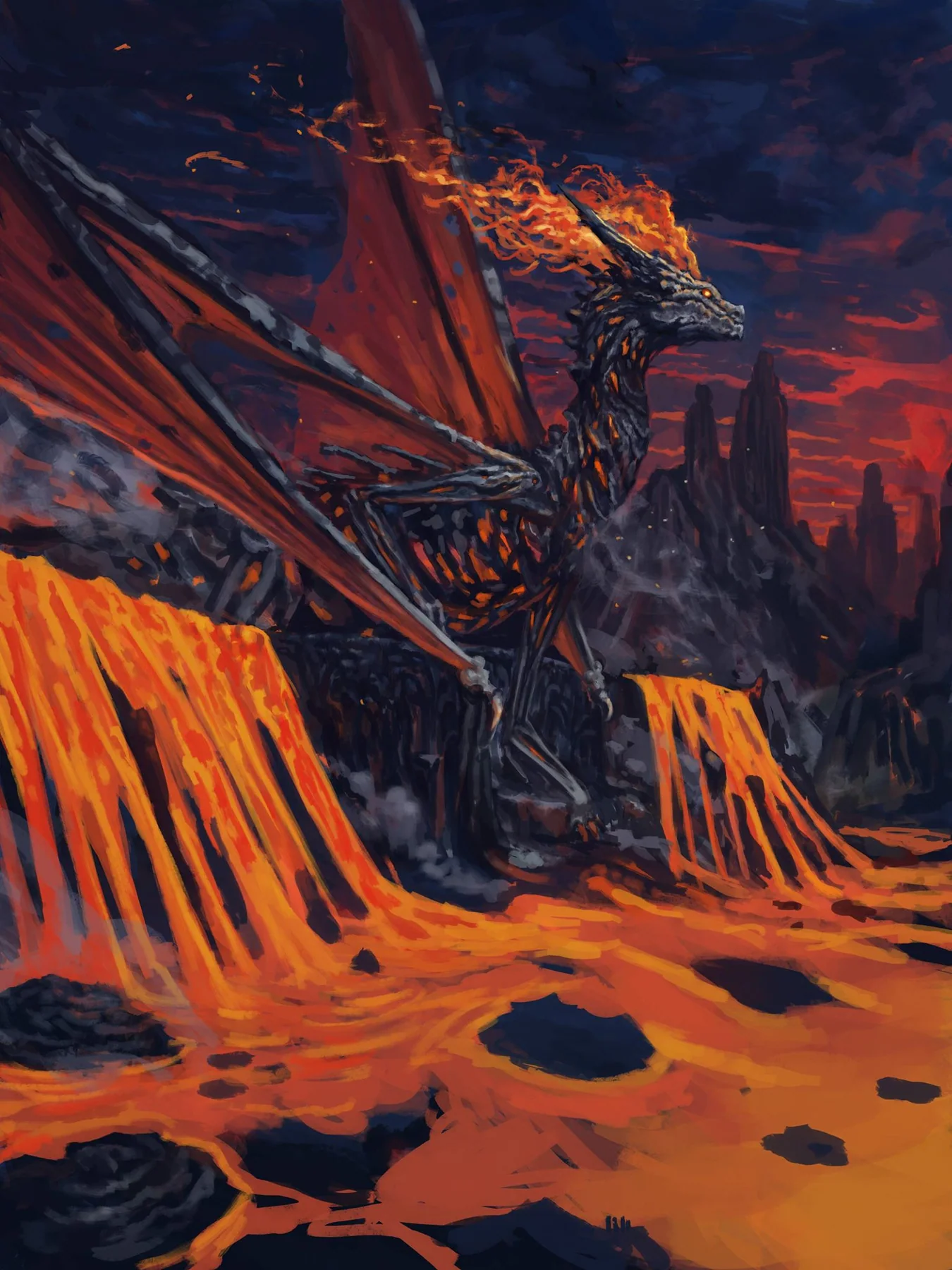
The common explanation is simple: Mt. Bleed erupted and caused the grave fire.
That is what people believe. It is not the full truth.
The fire is connected to Ziena, her failed experiments, the Eye of the Raven, the shadow called Necros, and the necrodragon Rhazhog. The world map begins as the player's structure for exploration, but the deeper story eventually breaks that structure. The Eye is lost. The shadow moves. The map is gone. The final path leads toward Mt. Bleed.
Ekothis is not just a setting. It is the mystery.
Comments