GRAVEFIRE Gameplay Systems
A detailed breakdown of GRAVEFIRE's event progression, isometric dungeon crawl, card battles, deck-building, rewards, stats, effects, and inspirations.
GRAVEFIRE is a deck-building roguelike. Everything that matters in battle is expressed as a card, and the deck changes as you progress through the burned regions of Ekothis.
The primary design references are:
- Dream Quest
- Pokemon Mystery Dungeon
- Slay the Spire
- Need for Speed: Hot Pursuit from 2010
The first three define the mix of roguelike structure, turn-based danger, and card/deck progression. Need for Speed: Hot Pursuit matters for a different reason: its Autolog career map inspired the event selection structure. In GRAVEFIRE, you unlock regions, pick events within them, and gradually move across the realm as new events appear.
The world map is not a linear level list. Each unlocked region can contain different event types, and events can be combined into small linear story chains.
The main event categories are:
- Explore: move through an isometric dungeon and survive its floors.
- Memory: solve a picture puzzle that unlocks a past event.
- Situation: make choices in a short story sequence.
- Battle: fight a regular or elite card battle.
- Cutscene: watch a non-interactive story sequence.
The Messenger wraps this structure in fiction. She is the narrator, the guide, and the personification of the mission system. She speaks through the Eye of the Raven, gives direction, sometimes rewards special cards, and frames the story as something being drawn and reconstructed from afar.
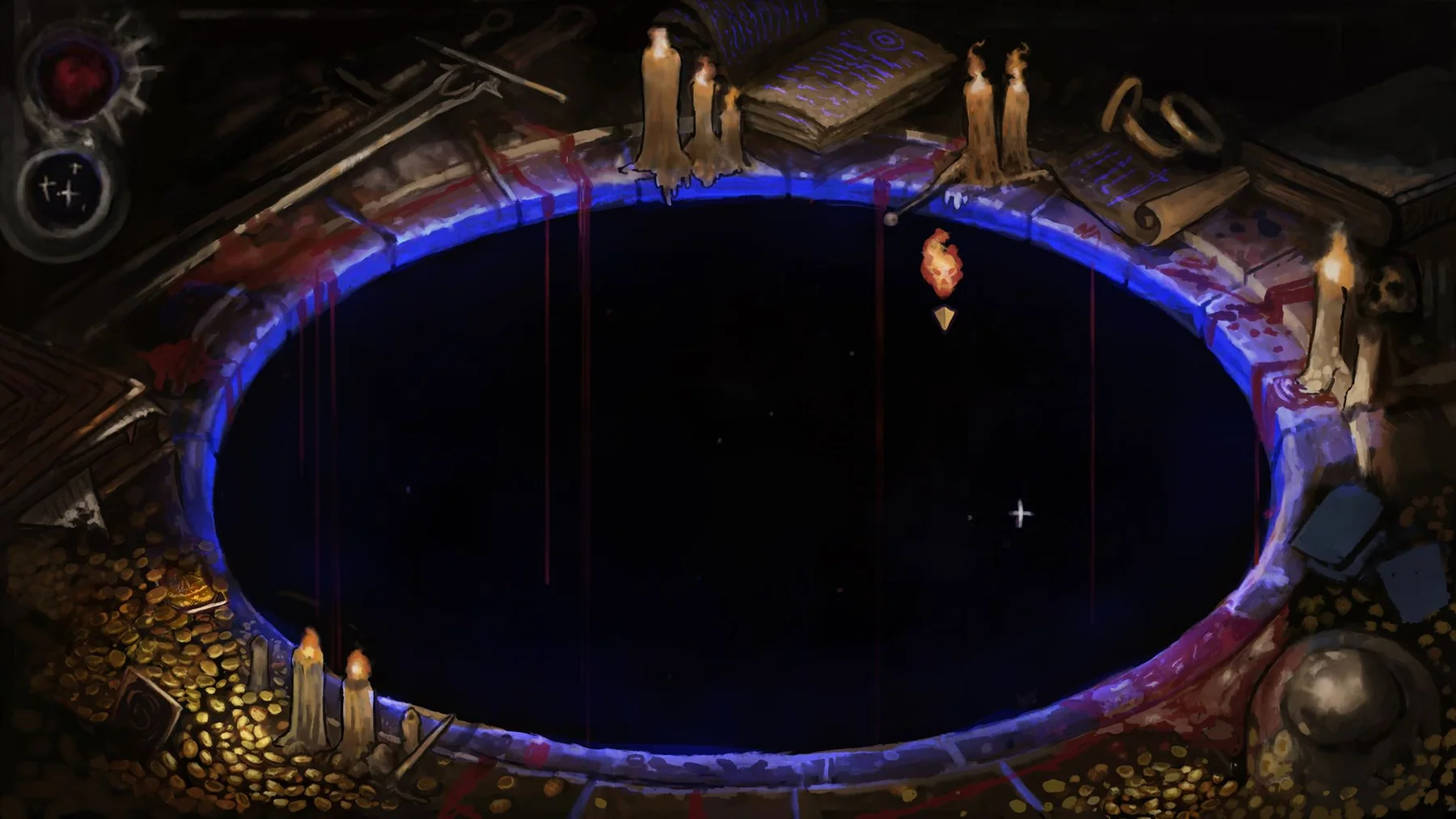
The most basic event is a dungeon crawl, but there are several variations.
Survive is the cleanest form. Explore a dungeon, reach each next floor, and survive until the event ends at the last floor.
Soul Liberation asks you to find a soul trapped on one of the dungeon floors, usually the last floor, then use your special skills to free it.
Soul Searching begins with a body that has risen from the grave without its soul. The body is harmless and aimless, so you escort it through the dungeon until it finds the missing soul. During card battles, the undead creature sits beside your character's cards and can be attacked by dungeon monsters. You must protect yourself and the undead. If you succeed, you are rewarded with powerful skills and moves as cards.
Soul Capture appears in places where monsters have become powerful because many wandering souls are present. In this event type, you can capture monster souls and add them to your team. Captured souls join your side on the next turn. If they survive the deck, they stay with you in future battles.
Find an Item asks you to locate a special item on a dungeon floor. Once you acquire it, you can end the event immediately or continue exploring.
A Situation is a choice-driven story event. It usually gives two to four options and can resolve over two to five steps. Outcomes can add cards or skills to the deck, raise HP or strength, or remove cards. The result can be good or bad depending on the situation and the choices made.
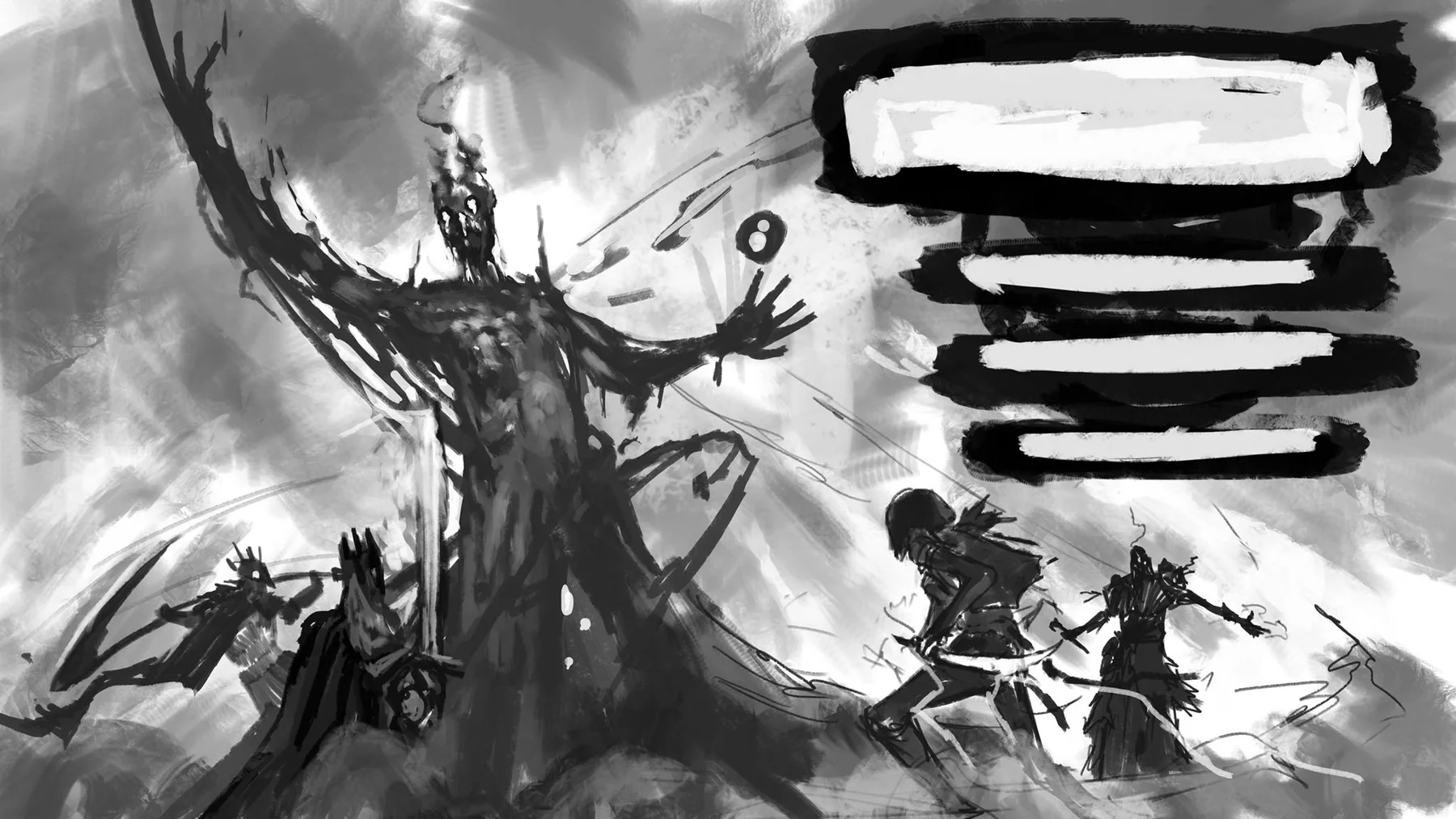
A situation can happen as a standalone event or appear inside a dungeon as story progression. Situations use static art to visualize what is happening.
A Healing Event is a special situation with a guaranteed good outcome. It does not appear as a standalone event. It usually appears before an elite battle or a serious threat, and can restore HP, boost strength, or grant skills that help with the upcoming fight.
A Cutscene is a situation without choices. The player watches it, reads dialogue, and can skip it like a video. The cutscene art is presented as rough sketches drawn by the Messenger on parchment.
Memories are like situations with a puzzle layer. They reveal what, why, and how the world became this way. A memory is a picture jigsaw puzzle. Rearranging it correctly unlocks a full memory, which then plays like a cutscene.
The core dungeon crawl uses isometric projection. Dungeons contain multiple floors, and each floor is made of procedurally generated chambers connected by narrow hallways.
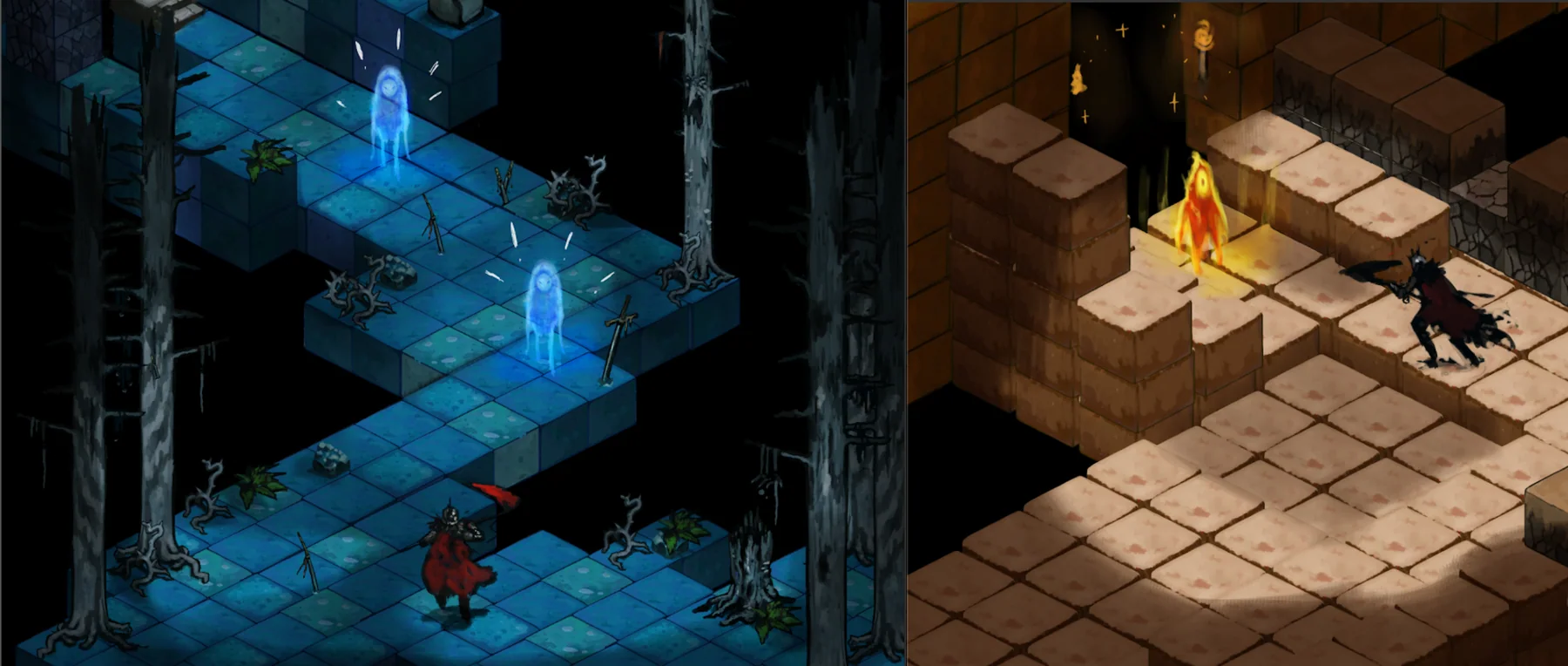
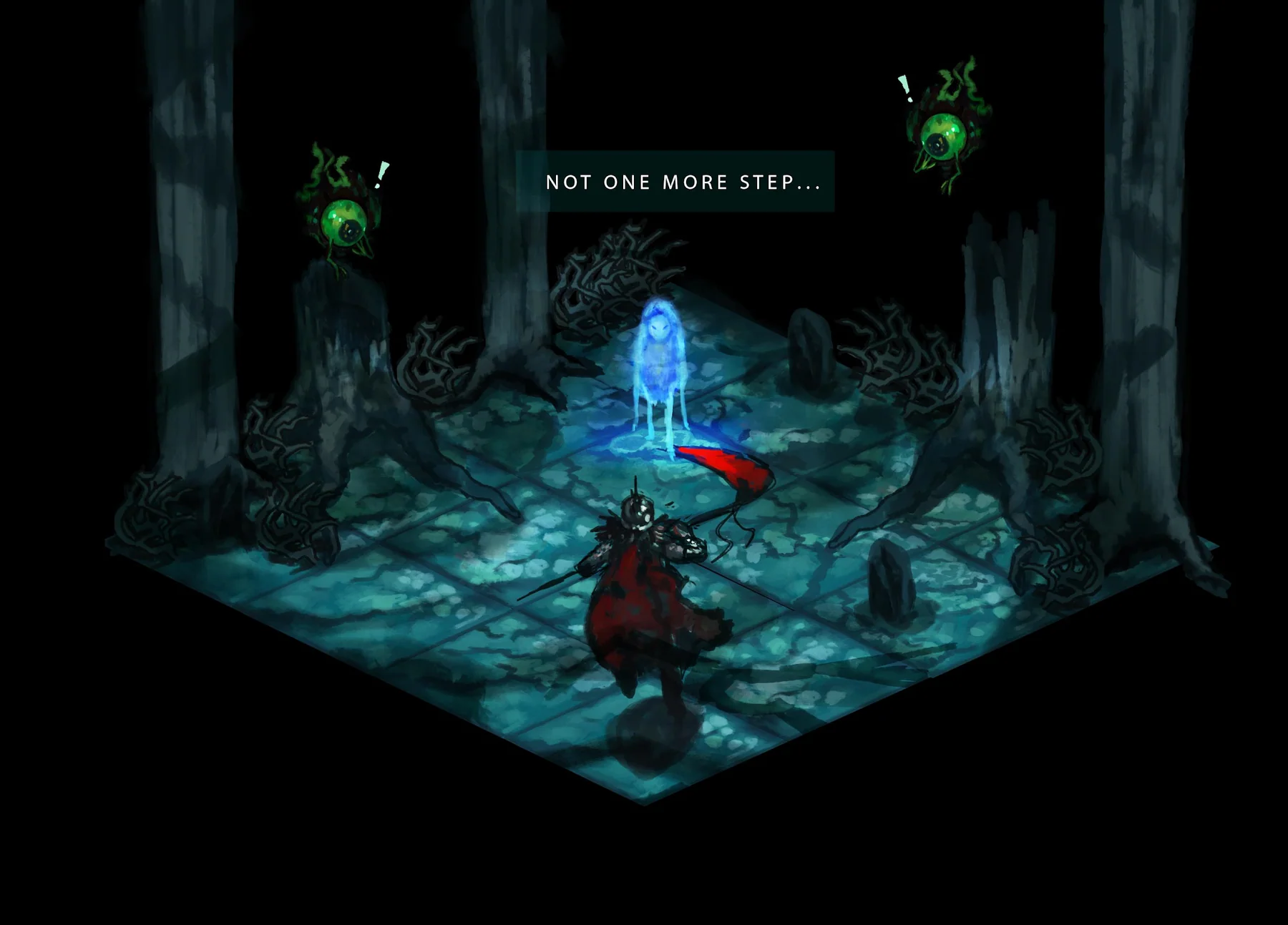
When you reach a staircase or exit, you progress to the next floor. Monsters wait inside the dungeon as spirit totems. They look like ghosts or energy markers hovering above the earth. When you move close enough to a totem, the battle begins.
The monster revealed by a totem can be random, depending on the dungeon and on the color or intensity of the totem's energy. Elite monsters are different: they appear as themselves on the map, and touching them starts an elite battle.
Mr. Keeper can appear randomly on dungeon floors. He is a jolly seller who carries a portable wooden table on his shoulders and spreads his items out when encountered.
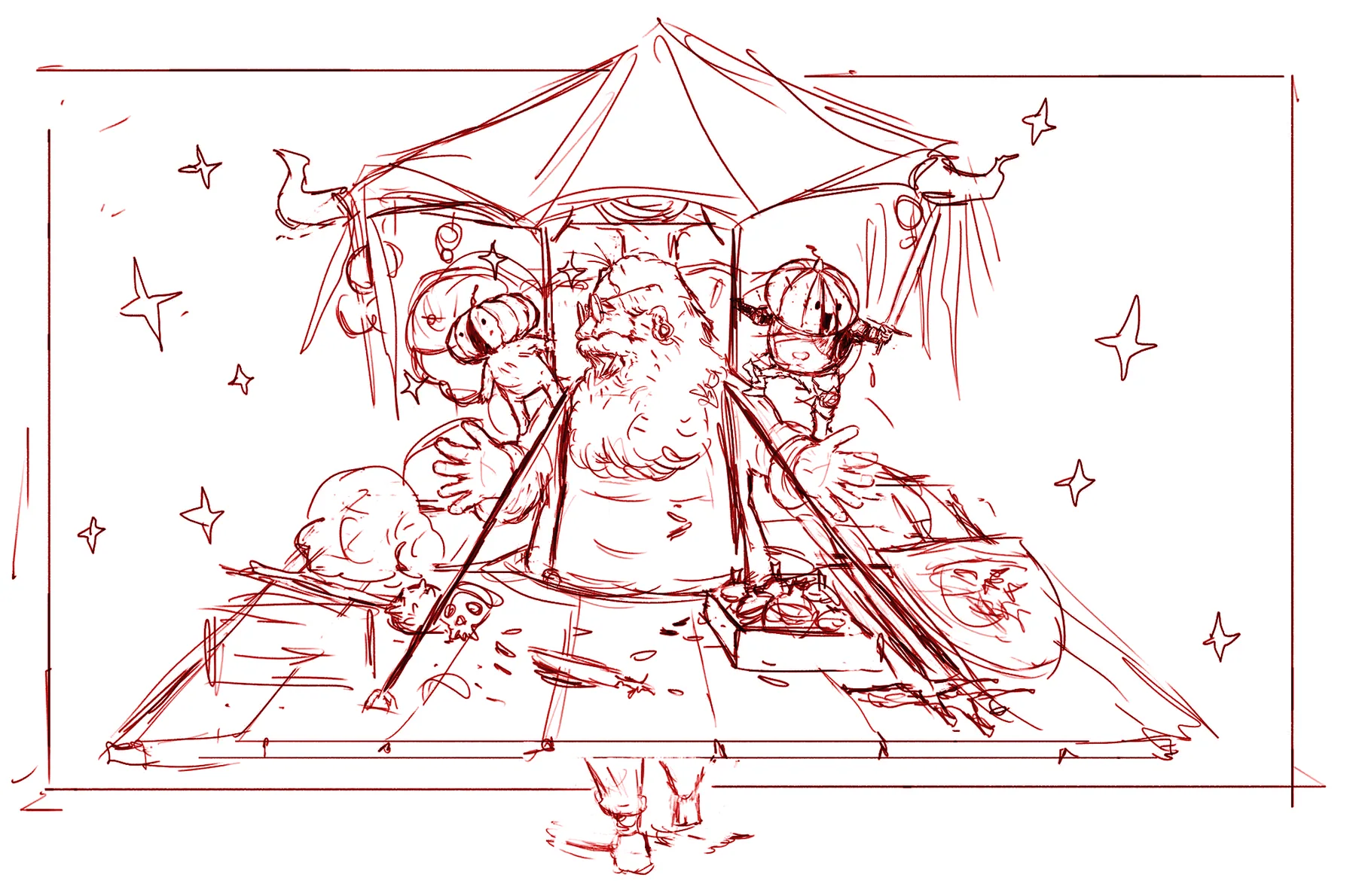
You can pick up and consume the items he offers, but he does not ask for payment until you leave the area. If you cannot pay, he calls you a thief and fights you in a card duel. He is powerful enough that stealing from him should be a serious decision.
Battles are card-based, and the rule is simple: everything in battle is a card.
The player's attacks, defenses, skills, powers, and consumables are cards. Monsters appear as cards. Enemies have names and stats like HP, Strength, and Endurance. Each enemy monster has its own small deck, usually much more limited than the player's deck. Early monsters may have low HP, a few attack and defense cards, and almost no strategic cards.
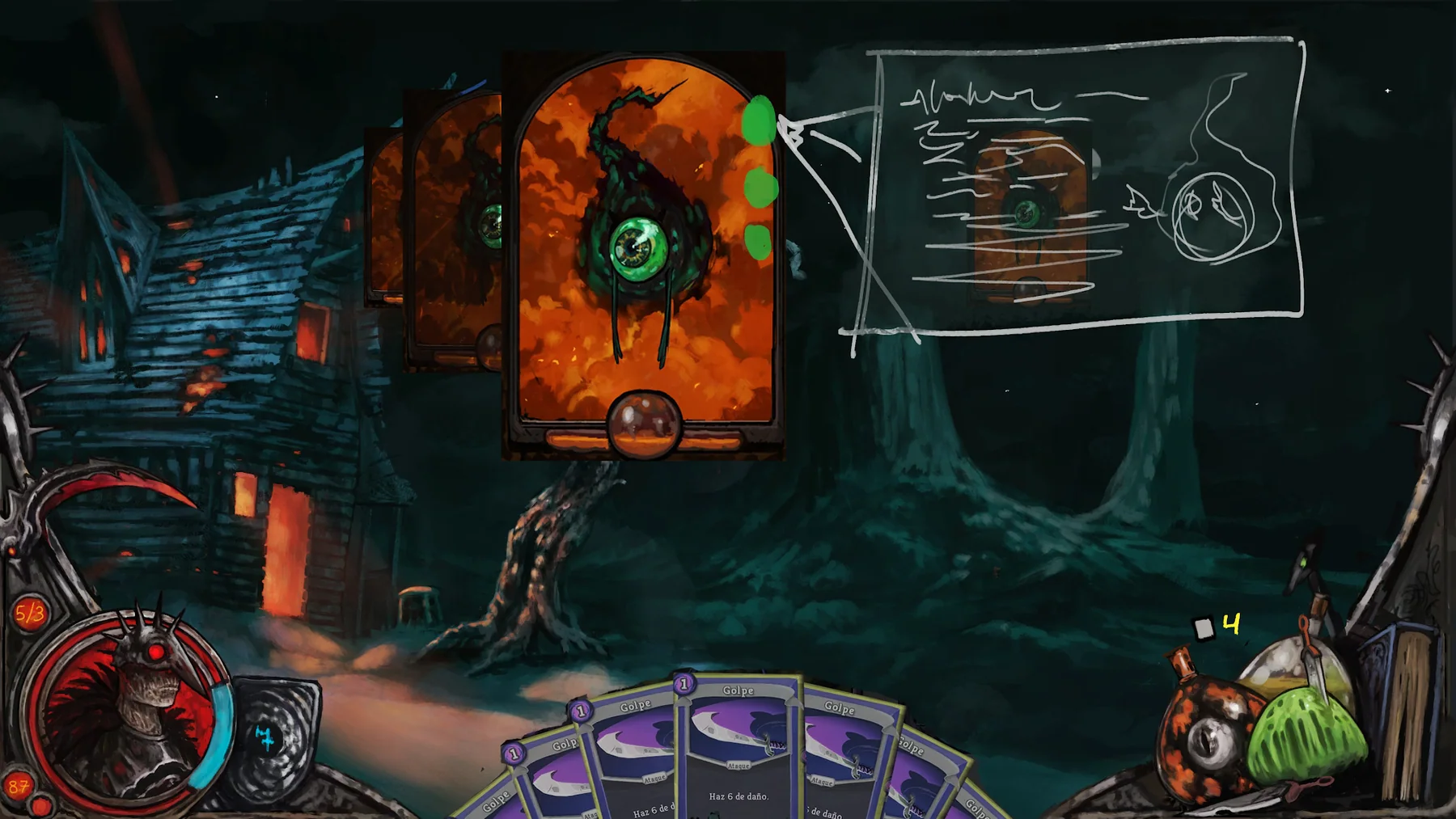
Regular monster battles can be one-on-one or group fights if multiple monster totems are nearby. This is similar in structure to walking through a cave or tall grass and triggering a battle, except the battle system is built around cards.
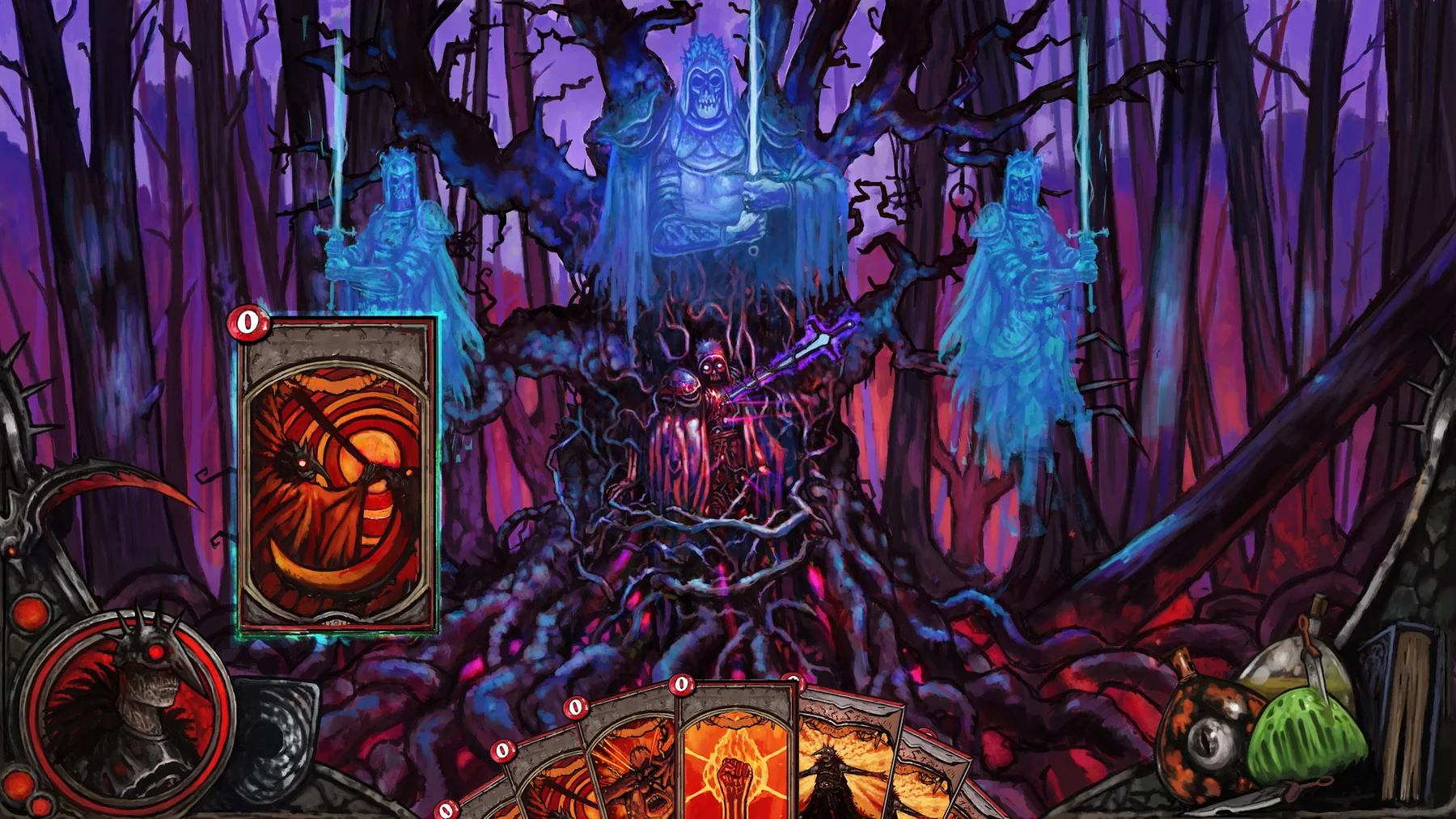
Elites are overpowered monsters with strong HP, Endurance, and Strength. They also use adaptive strategy and unique abilities. Their battles are meant to feel different from regular monster battles: they span the full screen, use animated backgrounds, and have special music.
Every dungeon has an elite waiting at the end. To complete the current event and exit the dungeon, you must defeat that elite.
A pile is a collection of cards. Cards move between piles according to battle rules or the text on the cards.
The main piles are:
- Deck: all cards obtained or purchased through progression.
- Hand: cards drawn each turn. You draw five cards every turn, then move unused cards to the discard pile at the end of the turn.
- Discard pile: cards discarded at end of turn or discarded mid-turn by card effects.
- Exhaust pile: cards that cannot be used again in the current battle, but return in the next battle.
- Consumables: use-once cards such as potions and antidotes. Once consumed, they are gone permanently.
Each hero, monster, and elite has stats used to compute attacks, defenses, and card effects.
- Hit Points: health. When HP reaches 0, the character dies.
- Energy: the resource spent to play cards. Energy is replenished at the end of every turn.
- Strength: the intensity of damage dealt by cards.
- Endurance: defense. Higher endurance reduces incoming damage.
- Armour: protection layered on top of HP. Damage is removed from armour before HP unless the attack is piercing.
- Accuracy: probability that an attack hits.
- Evasiveness: probability that the opponent evades. Default is 0.
Damage and hit probability are computed from character stats and the card's value:
Damage = (Card Value * Owner Strength) / Target Endurance
Probability of Damage = Effect Probability * Owner Accuracy * (1 - Target Evasiveness)
Every playable card has:
- Name
- Description
- Value: positive values are attack, negative values are defense.
- Rarity: Starter, Common, Uncommon, Rare, or Epic.
- Level: 1, 2, or 3. A card can be upgraded twice.
- Primary type: Attack, Defense, Skill, or Power. Many cards are a mix of more than one type.
After a win, you are rewarded with three cards and pick one. Reward cards are pulled randomly from the available card pool, and rarity controls their probability.
Starting probabilities are:
- Starter: 30%
- Common: 60%
- Uncommon: 30%
- Rare: -5%
- Epic: -15%
Negative rarity weights mean rare and epic cards cannot appear early. When you obtain a card of a rarity, that rarity's future probability goes down by 5%, while every other rarity goes up by 1%. This slowly moves the reward pool away from what you already have and toward rarer cards.
You can also earn gold by defeating monsters and completing missions. Gold is used to buy items from Mr. Keeper across dungeons.
Each main character begins at level 1 with base stats determined by that character. Defeating opponents and moving through dungeons grants gold and experience. After enough experience, the character levels up and stats increase. Experience curves and stat impact differ per character.
Every battle rule is expressed as an Effect. Damage is an effect. Raising or lowering stats is an effect. A card can combine multiple effects, and each effect has a target: self, team member, specific opponent, or everyone.
A Status is one or more effects attached to a target. It reapplies every turn for a fixed duration. Burn and Poison are statuses.
An Ability is a special status with a trigger. Damage Back, for example, deals a percentage of damage back to an attacker when triggered. Some abilities last one turn. Others can last several turns.
The deck changes through dungeons, battles, rewards, items, shops, and events. You pick one of three cards after defeating certain enemies. You may find cards and items on dungeon floors. Mr. Keeper can sell cards, buy cards, or exchange them for better options.
Items can be tossed out freely. Base deck cards are harder to remove because they represent actual abilities of the character. You can remove cards through certain situations, events, and level-up choices.
That is the heart of GRAVEFIRE: move through a haunted dungeon, survive the card battles inside it, and leave with a deck that says something about what happened there.
Comments